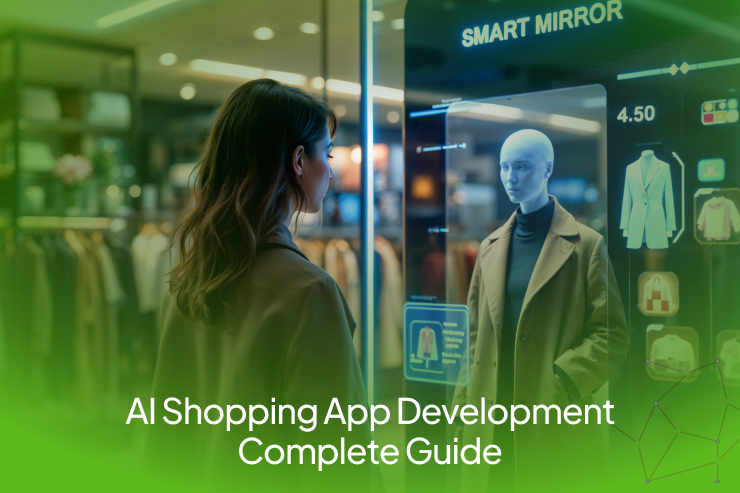
AI Shopping App Development: Complete Guide App Development
AI shopping apps are revolutionizing retail by combining mobile convenience with intelligent, data-driven personalization. These apps enable seamless browsing, smart product discovery, secure payments, AR try-on experiences, and real-time order tracking, all powered by AI technologies like recommendation engines, chatbots, and predictive analytics. Businesses benefit from enhanced customer engagement, operational efficiency, fraud prevention, and data-driven decision-making. While development involves challenges such as high investment, data quality, and legacy system integration, partnering with expert developers ensures scalable, future-ready solutions that meet rising consumer expectations.
AI shopping apps are revolutionizing retail by combining mobile convenience with intelligent, data-driven personalization. These apps enable seamless browsing, smart product discovery, secure payments, AR try-on experiences, and real-time order tracking, all powered by AI technologies like recommendation engines, chatbots, and predictive analytics. Businesses benefit from enhanced customer engagement, operational efficiency, fraud prevention, and data-driven decision-making. While development involves challenges such as high investment, data quality, and legacy system integration, partnering with expert developers ensures scalable, future-ready solutions that meet rising consumer expectations.
Introduction: How AI Is Redefining Modern Retail?
Artificial intelligence (AI) has become one of the most powerful forces transforming the global retail ecosystem. From how customers discover products to how retailers manage supply chains and predict demand, AI-driven technologies are reshaping every stage of the shopping journey. Today’s consumers expect speed, personalization, accuracy, and convenience, and AI shopping app development delivers exactly that.
Retail is no longer limited to physical shelves or static eCommerce websites. With mobile-first experiences dominating customer behavior, businesses are rapidly investing in AI-powered shopping applications to stay competitive. These intelligent platforms blend data analytics, machine learning, automation, and real-time insights to create seamless and highly personalized experiences.
According to industry projections, AI adoption in retail is growing at an exceptional pace, with global market value expected to surpass tens of billions of dollars by the end of this decade. This rapid expansion is fueled by increasing demand for personalized shopping, smarter inventory planning, predictive analytics for e-commerce, and efficient customer engagement tools.
For modern retailers, AI is no longer optional. It has become a strategic necessity. Businesses that leverage artificial intelligence shopping solutions can respond faster to market changes, reduce operational inefficiencies, and deliver meaningful omnichannel experiences. This guide explores AI shopping app development in detail, covering features, benefits, challenges, costs, trends, and the role of expert development partners like Progatix in building future-ready solutions.
Ready to build an AI shopping app that converts?
Let's Connect
What Is a Shopping App and Why Invest in Shopping App Development?
A shopping app is a mobile application that enables users to browse products, compare prices, place orders, make secure payments, and track deliveries directly from their smartphones or tablets. Unlike traditional websites, mobile shopping apps are designed for speed, convenience, and user engagement.
With mobile commerce steadily overtaking desktop-based transactions, businesses are increasingly prioritizing e-commerce mobile app development. AI shopping apps further elevate this experience by adding intelligence, automation, and personalization.
Customers today prefer mobile apps over mobile-friendly websites for several reasons:
- Faster loading speeds and smoother performance
- Personalized interfaces tailored to individual preferences
- Simplified navigation and intuitive user flows
- Real-time notifications and updates
- Seamless integration with digital wallets and payment gateways
An AI-based mobile app allows retailers to understand customer behavior at a deeper level, predict needs, and proactively engage users. This results in higher conversions, improved retention, and increased lifetime customer value.
Market Statistics Highlighting the Growth of Shopping Apps
Mobile shopping has become a dominant force in global retail. According to internet sources, the recent statistics clearly validate why businesses are quickly investing in AI retail app development:
- More than 60% of smartphone users have made at least one purchase through their mobile devices in the last six months
- Mobile shopping apps contribute nearly one-third of all online retail purchases
- Over 80% of shoppers use their phones inside physical stores to compare prices, read reviews, and research products
- A majority of users open shopping or utility apps multiple times a day
In addition to user adoption trends, the global AI in retail market was valued at USD 11.83 billion in 2024 and is projected to reach around USD 62.64 billion by 2034, growing at a CAGR of 18.14% from 2025 to 2034, as per the Precedence Research. This remarkable growth underscores the increasing reliance on AI-powered solutions, including smart shopping apps, recommendation engines, and predictive analytics, as retailers strive to deliver faster, more personalized, and seamless mobile-first experiences.
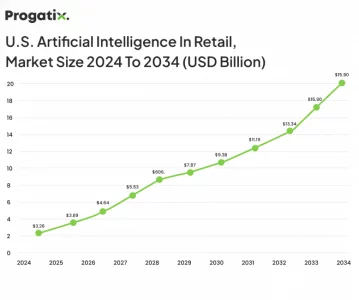
These figures highlight a clear trend: customers expect intelligent, mobile-first shopping experiences. AI integration in apps enables retailers to meet and exceed these expectations with smarter features and data-driven functionality.
Transform your eCommerce with AI-powered experiences
Let's ConnectCore Features of an AI Shopping App
Successful AI shopping app development requires more than simply adding automation to a traditional eCommerce platform. A high-performing smart shopping app blends essential eCommerce functionality with advanced artificial intelligence shopping solutions that continuously learn from user behavior, preferences, and market data. These features collectively create an intelligent, scalable, and engaging e-commerce mobile app experience.
-
User Registration and Profile Management
A smooth onboarding experience is the first interaction users have with an AI-based mobile app, making it a critical feature. Customers should be able to register easily using email, phone numbers, or social media accounts. Once registered, personalized user profiles allow customers to manage addresses, payment methods, order history, and preferences from a single dashboard.
AI integration in apps enhances this process by learning user behavior over time. The system can automatically customize the interface, highlight relevant products, and adapt navigation patterns, forming the foundation of a truly personalized shopping app that evolves with each user.
-
Product Catalog and Smart Search
The product catalog is the core of any AI e-commerce app. It must present products with detailed descriptions, high-resolution images, pricing, variants, specifications, and availability across categories. However, what differentiates an AI-driven catalog is intelligent discovery.
With visual search AI, users can upload images and instantly find similar products. Voice-based search enables hands-free exploration using natural language, while AI-powered filters help users narrow results faster. These capabilities significantly reduce friction in the buying journey and increase conversions in modern AI retail app development.
-
Shopping Cart and Wishlist
A dynamic shopping cart allows customers to add, remove, or modify products seamlessly, while wishlists let users save items for future reference. AI analyzes cart and wishlist activity to identify intent signals.
Using AI product recommendation logic, the app can send reminders for saved items, suggest complementary products, or offer time-sensitive discounts. These intelligent nudges help increase average order value and encourage repeat purchases in a machine learning shopping app.
-
Order Management and Real-Time Tracking
Transparency after checkout is essential for customer trust. AI-powered order management systems provide real-time order tracking, estimated delivery times, order history, and simplified return or exchange processes.
Advanced algorithms can predict delivery delays, optimize logistics routes, and proactively notify customers. This predictive capability improves satisfaction while reducing support queries across the e-commerce mobile app ecosystem.
-
Ratings and Reviews
Customer feedback plays a crucial role in purchase decisions. AI-driven review analysis goes beyond basic star ratings by using sentiment analysis to identify common themes, highlight frequent issues, and surface the most helpful reviews.
It allows new buyers to make confident decisions while giving retailers actionable insights to improve product quality and customer experience.
-
Social Media Integration
Social media connectivity amplifies brand visibility and engagement. Users can share products, reviews, or wishlists across platforms, driving organic reach and referral traffic.
AI can track engagement metrics and identify which shared products generate the most interest, supporting data-driven social commerce strategies within a cloud-based AI shopping platform.
-
Multiple Payment Options
A modern e-commerce mobile app must support multiple payment methods, including credit cards, digital wallets, and region-specific gateways. AI enhances payment security by monitoring transactions in real time and flagging suspicious behavior.
Fraud detection systems powered by AI help reduce chargebacks and protect both customers and businesses, ensuring a secure checkout experience.
-
Push Notifications
Personalized push notifications are a powerful engagement tool. AI determines the ideal timing, frequency, and content of notifications based on user behavior.
Alerts for abandoned carts, exclusive discounts, price drops, or order updates are optimized through AI models to maximize engagement without overwhelming users. In advanced systems, price prediction AI can notify users when a product is likely to drop in price, encouraging timely purchases.
-
AR Try-On Feature
The AR try-on feature has revolutionized online shopping by bridging the gap between physical and digital retail. Customers can virtually try on clothing, accessories, cosmetics, or visualize furniture within their space before purchasing.
This immersive experience significantly boosts buyer confidence, reduces return rates, and increases conversion, making AR a must-have feature in next-generation AI shopping app solutions.
-
AI Chatbots and Intelligent Shopping Assistants
An intelligent shopping assistant powered by AI provides round-the-clock customer support. A chatbot shopping assistant can answer FAQs, recommend products, track orders, process returns, and guide users through checkout.
By automating routine queries, businesses reduce operational costs while delivering instant, consistent support across all touchpoints.
-
Voice Search and Conversational Commerce
Voice-enabled commerce is transforming how users interact with shopping apps. Customers can search products, reorder items, or explore categories using natural language voice commands.
This conversational approach makes shopping more accessible and convenient, particularly for mobile users, and strengthens engagement in AI shopping app development in the USA and global markets alike.
-
Personalized Recommendations and AI Product Recommendation Engines
Personalization is at the heart of AI-driven retail. AI recommendation engines analyze browsing history, purchase behavior, demographics, and preferences to deliver hyper-relevant product suggestions.
These recommendations increase engagement, improve customer satisfaction, and drive higher average order values, making personalization one of the most impactful features of artificial intelligence shopping solutions.
Create AI-powered marketplaces
Let's ConnectAdvantages of AI Shopping App Development
Implementing AI in retail applications delivers measurable benefits that directly impact business performance, scalability, and customer satisfaction.
-
Enhanced Customer Experience
AI-powered personalization ensures that every interaction feels relevant and timely. From intelligent recommendations to instant chatbot support, customers enjoy faster responses and tailored experiences, leading to higher loyalty and retention.
-
Increased Operational Efficiency
Automation reduces manual workloads across customer service, inventory management, and analytics. Predictive analytics for e-commerce helps retailers optimize staffing, logistics, and inventory planning, ensuring resources are used efficiently.
-
Data-Driven Decision Making
AI transforms raw data into actionable insights. Retailers gain deep visibility into customer behavior, demand patterns, and market trends, enabling smarter pricing, promotions, and strategic planning.
-
Cost Savings Through Automation
By automating repetitive tasks such as inventory updates, customer inquiries, and fraud detection, AI significantly reduces labor costs while improving accuracy and consistency.
-
Smarter Inventory Management
Machine learning shopping app models forecast demand with precision, preventing overstocking and stockouts. Automated reordering ensures optimal inventory levels, improving cash flow and customer satisfaction.
-
Improved Fraud Detection
AI systems continuously analyze transaction data to identify anomalies and suspicious behavior in real time. This proactive approach strengthens security across payments, returns, and account activity.
-
Personalized Marketing and Sales Growth
Targeted campaigns powered by AI deliver personalized offers, recommendations, and promotions. This level of customization increases conversion rates, boosts revenue, and maximizes customer lifetime value in modern mobile app development strategies.
Challenges in AI Shopping App Development
While the benefits of building an AI shopping app are substantial, implementing artificial intelligence within retail applications is not without obstacles. Businesses must approach AI retail app development strategically to avoid costly missteps and ensure long-term success. From technical complexities to regulatory concerns, understanding these challenges early can significantly improve outcomes.
-
Data Quality and Availability
Data is the backbone of every AI-driven system. An AI e-commerce app depends on clean, accurate, diverse, and continuously updated datasets to function effectively. Whether it’s powering AI product recommendation engines, price prediction AI, or predictive analytics for e-commerce, the quality of outputs is directly tied to the quality of inputs.
Retailers often struggle with fragmented data spread across multiple systems, inconsistent formats, missing values, or outdated records. Collecting customer behavior data, purchase history, browsing patterns, and inventory metrics requires structured pipelines and strong governance frameworks. Without proper data cleansing, normalization, and enrichment, even the most advanced machine learning shopping app models can produce unreliable results.
Additionally, securing this data is equally important. Businesses must invest in data protection mechanisms, encryption, and access control to safeguard sensitive customer information used in AI-based mobile app development.
-
Integration with Legacy Systems
Many retailers still rely on legacy software such as outdated ERPs, inventory tools, or point-of-sale systems. Integrating modern artificial intelligence shopping solutions with these older platforms can be one of the biggest hurdles in AI integration in apps.
Legacy systems often lack APIs or real-time data-sharing capabilities, making it difficult to synchronize data flows between AI models and operational systems. In some cases, businesses must modernize or partially rebuild their infrastructure to support intelligent automation and real-time analytics.
This challenge is particularly relevant for large retailers pursuing AI shopping app development in the USA markets, where enterprises often operate at scale with deeply embedded systems. Strategic planning, middleware solutions, and expert architectural design are essential to ensure seamless interoperability.
-
High Initial Investment
Developing a robust AI-powered smart shopping app requires a significant upfront investment. Costs include hiring specialized AI engineers, data scientists, UI/UX designers, and backend developers, along with expenses for cloud infrastructure, AI frameworks, and continuous model training.
Advanced features such as visual search AI, intelligent shopping assistants, or AR try-on features further increase development complexity and cost. Smaller and mid-sized businesses may find these expenses challenging without a phased implementation strategy or expert development partner.
However, when implemented correctly, the long-term ROI often outweighs the initial costs through automation, increased conversions, improved customer retention, and operational efficiency.
-
Data Privacy and Compliance
AI-driven e-commerce mobile app platforms handle vast amounts of personal and transactional data. It includes names, addresses, payment details, browsing behavior, and purchase history. Ensuring compliance with global data protection regulations such as GDPR and CCPA is non-negotiable.
Failure to comply can result in legal penalties, reputational damage, and loss of customer trust. AI systems must be designed with privacy-by-design principles, including data minimization, consent management, transparency, and secure storage.
Retailers adopting cloud-based AI shopping platforms must also ensure that cloud providers meet compliance standards and offer robust security certifications.
-
Algorithm Bias and Ethical Concerns
Algorithmic bias occurs when AI models unintentionally favor certain outcomes due to biased training data. In a personalized shopping app, this could lead to unfair product recommendations, pricing disparities, or exclusion of specific customer segments.
To mitigate bias, businesses must conduct regular audits of AI recommendation engines, diversify training datasets, and apply fairness testing techniques. Ethical AI usage is critical not only for compliance but also for maintaining customer trust and brand credibility.
Partner with experts in AI software development company
Let's ConnectStep-by-Step Process for AI Shopping App Development
Building a successful AI retail solution requires a structured, well-planned development approach. Below is a comprehensive step-by-step process that ensures scalability, performance, and business alignment.
-
Define a Clear Strategy
Every successful AI shopping app begins with a clear strategy. Businesses must define their objectives, whether it’s improving customer engagement, increasing conversions, optimizing inventory, or automating support through a chatbot shopping assistant.
Identifying target audiences, markets, and specific AI use cases ensures that development efforts remain focused and aligned with measurable business outcomes.
-
Conduct Market Research
Thorough market research helps identify customer expectations, competitor capabilities, and emerging trends in AI retail app development. Understanding what users value, such as faster search, voice commerce, or intelligent recommendations, helps prioritize features that differentiate your app.
This phase also helps determine how advanced AI integration should be and which technologies are most relevant to your business model.
-
Choose the Right Technology Stack
Selecting the right technology stack is critical for performance and scalability. It includes choosing programming languages, AI frameworks, databases, and cloud infrastructure.
A cloud-based AI shopping platform enables scalability, real-time processing, and seamless updates. Cloud deployment also supports advanced analytics, machine learning pipelines, and global accessibility for modern e-commerce mobile apps.
-
Design System Architecture
A flexible and modular architecture ensures smooth data flow between frontend interfaces, backend systems, and AI models. Well-designed architecture allows easy integration of future features such as price prediction AI, new recommendation algorithms, or AR capabilities.
Scalability and fault tolerance should be built into the architecture from the start to support growth and peak traffic periods.
-
Use High-Quality Data
Data preparation is one of the most critical steps in AI development. Businesses must collect data from multiple sources, clean inconsistencies, remove duplicates, and preprocess datasets for training AI models.
High-quality data improves the accuracy of AI product recommendation systems, predictive analytics for e-commerce, and intelligent shopping assistant functionality.
-
Develop Frontend and Backend
Frontend development focuses on delivering intuitive UI/UX for smooth navigation, fast loading, and engaging interactions. Backend development handles databases, APIs, integrations, security, and AI processing.
This stage is where core AI-based mobile app functionality comes to life, combining intelligent features with reliable system performance.
-
Testing and Quality Assurance
Rigorous testing ensures the reliability, security, and usability of the application. Functional testing validates features, performance testing checks scalability, and security testing protects against vulnerabilities.
User acceptance testing ensures that the AI shopping app meets real customer expectations before launch.
-
Deployment and Maintenance
After deployment, whether cloud, hybrid, or on-premise, continuous monitoring is essential. AI models must be retrained regularly, features updated, and performance optimized to stay competitive in a rapidly evolving market.
Future of AI Shopping Apps and Retail Media Trends
The future of retail is deeply intertwined with artificial intelligence. AI-powered smart shopping apps are moving beyond basic personalization toward hyper-personalized, predictive, and immersive experiences.
Emerging trends include real-time AI recommendation engines, advanced visual search AI, predictive inventory planning, and immersive AR/VR shopping environments. Voice commerce and conversational AI are also redefining how users interact with brands, making shopping more intuitive and accessible.
Sustainability analytics, advanced attribution models, and cross-channel intelligence will further empower retailers to make smarter decisions. Businesses that embrace these innovations will gain a decisive edge in customer engagement, loyalty, and revenue growth.
Cost of AI Shopping App Development
The cost of AI shopping app development varies significantly based on complexity, features, and scale. A basic AI-enabled e-commerce mobile app may start around $20,000, while advanced platforms incorporating machine learning, AR try-on features, and predictive analytics can exceed $300,000.
Key cost drivers include:
- Feature scope and AI sophistication
- Cloud infrastructure and data storage
- Development team expertise
- Ongoing maintenance and model optimization
Understanding these factors early helps businesses plan realistic budgets and development timelines.
AI shopping app development is redefining the retail industry by enabling deeper personalization, operational efficiency, and data-driven decision-making. As consumer expectations continue to rise, AI-powered shopping apps will become central to digital commerce strategies.
Businesses that invest today in intelligent, scalable, and ethically designed AI solutions will not only stay competitive but will lead the future of retail innovation.
Why Choose Progatix for AI Shopping App Development?
Progatix is a next-generation custom software development company trusted by global brands for delivering innovative, scalable, and secure digital solutions. With decades of experience in mobile app development and AI-driven platforms, Progatix empowers retailers to build intelligent, future-ready shopping solutions.
From AI shopping app development in the USA markets to global enterprise deployments, Progatix delivers:
- Advanced AI retail app development
- Custom AI e-commerce app solutions
- Scalable cloud-based AI shopping platforms
- Intelligent AI recommendation engines and predictive analytics
- AR try-on feature integration and chatbot shopping assistants
By combining strategic consulting, cutting-edge technology, and customer-centric design, Progatix transforms complex ideas into powerful AI-driven retail experiences.
Partner with experts in AI shopping app development
Let's Connect


 Let's Discuss Your Tech Solutions