The Ultimate App Modernization Strategy Guide for Businesses App Development
The digital landscape is growing at an extraordinary pace, presenting businesses with both possibilities and challenges. Many organizations, however, still depend on legacy applications developed years or even decades ago. These outdated, traditional systems can confine efficiency, limit scalability, and negatively impact user experience. Application modernization is no longer only a technical upgrade; it has become a strategic imperative that can ascertain whether a business prospers or falls behind in a competitive market.Application modernization includes updating legacy software to align with current technology standards, business goals, and customer expectations. Unlike routine maintenance, it often needs significant changes to an application’s architecture, platform, or hosting environment, and in some cases, rewriting code completely. This guide explores why modernization is crucial, how to develop a strong strategy, the technical approaches involved, evolving trends, real-world case studies, and ways businesses can accomplish measurable results via this transformation.
The Market Momentum: Why Now Is the Time to Modernize
According to marketsandmarkets’s report, the global application modernization services market was estimated at USD 22.67 billion in 2024 and is anticipated to grow to USD 51.45 billion by 2031, at a CAGR of 14.6% between 2025‑2031.
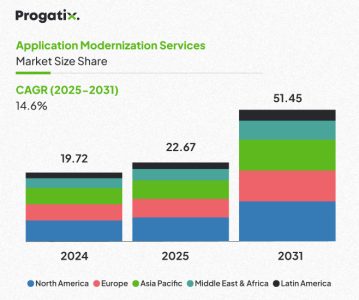
This rapid market growth makes it clear: companies are increasingly investing in modernization to stay competitive, secure, and efficient.
Understanding Application Modernization
What Is Application Modernization?
Application modernization is the process of transforming outdated, monolithic applications into flexible, scalable, and modern software solutions. These transformations often include:
- Migrating applications to cloud-based environments
- Refactoring or rearchitecting code for a microservices architecture
- Integrating DevOps practices for faster deployment cycles
- Implementing containerization for consistency across development and production
- Replacing outdated systems with modern SaaS or custom-built solutions
Modernization goes beyond just being about technology; it also impacts business operations, customer engagement, and revenue generation. It allows organizations to remain competitive, enhance operational efficiency, and reduce long-term costs linked with maintaining legacy systems.
Why Businesses Need to Modernize Legacy Applications?
Legacy applications were often built on older technologies and frameworks that are difficult to maintain and integrate with modern solutions. Over time, these systems can create several challenges:
- Performance issues: Slow load times and processing delays can frustrate users and reduce productivity.
- Limited scalability: Legacy systems are often monolithic and cannot handle increased user demand without expensive infrastructure upgrades.
- Integration challenges: Older applications might not support APIs or modern integration methods, limiting collaboration with other systems.
- Security and compliance risks: Outdated frameworks may be vulnerable to breaches, leaving sensitive business data at risk.
- Poor user experience: Legacy systems often lack intuitive interfaces, mobile responsiveness, or personalization capabilities.
A strong modernization strategy can address these challenges, further leading to improved operational efficiency, customer satisfaction, and business agility.
Key Benefits of Application Modernization
Modernizing legacy applications offers several tangible and intangible benefits:
- Improved Operational Efficiency: Modern systems simplify workflows, automate manual processes, and reduce downtime.
- Improved Scalability: Cloud-based solutions and microservices architectures allow applications to grow with business needs.
- Better Security and Compliance: Modern technologies ensure up-to-date security patches, data encryption, and compliance with industry regulations.
- Cost Optimization: Reduces maintenance costs associated with legacy systems and prevents revenue losses due to system failures.
- Competitive Advantage: Businesses can innovate faster, offer new services, and improve customer engagement.
Keys to Consider Before Application Modernization
Modernizing legacy applications is a significant step toward staying competitive, improving user experience, and improving operational efficiency. However, successful application modernization needs careful planning, assessment, and foresight. Before beginning the modernization journey, organizations should evaluate several key considerations to ensure the project aligns with business aims and increases return on investment.
1. Start with “Why”
The first step in any modernization effort is to distinctly define why the initiative is required. Comprehending the underlying motivation ensures that the project addresses real business requirements rather than becoming an expensive technical procedure.
Ask yourself these questions:
- Are current applications slow or unresponsive, causing delays or inefficiencies?
- Is it difficult to update or maintain existing systems?
- Do legacy applications integrate poorly with modern tools or cloud services?
- Are new features or capabilities required that the current system cannot support?
Answering these questions helps determine whether modernization will deliver meaningful benefits and rank the applications that require attention primarily.
2. Identify Challenges Preventing Modernization
Despite the advantages, many organizations hesitate to modernize due to technical, organizational, or financial barriers. Recognizing these challenges early allows businesses to plan effectively and mitigate risks. Key considerations include:
- Is your team and infrastructure capable of supporting a modernized application?
- What will the cost of modernization be, and how will it impact your IT budget?
- Do you have the internal expertise to manage the project, or will you need external support?
- Does your organization have buy-in from leadership and stakeholders to execute new processes or technologies?
Proactively addressing these queries can avoid delays, cut down budget overruns, and ensure streamlined adoption of modernized systems.
3. Tactical vs. Strategic Approach
Selecting the right approach to modernization is crucial. Organizations often need to balance short-term tactical improvements with long-term strategic transformation:
- Tactical Approach: Focuses on immediate problem-solving, such as updating specific modules, improving performance, or fixing bottlenecks. It prioritizes quick wins and maximizes ROI in the short term.
- Strategic Approach: Emphasizes long-term business growth, scalability, and future-readiness. This approach involves planning comprehensive architectural changes, cloud migration, and adopting modern development practices to prepare the organization for evolving market demands.
A successful modernization strategy usually merges both approaches, enabling organizations to address urgent concerns while laying the base for sustainable transformation.
4. Build a Future-Ready Team
Application modernization is not only a technical endeavor but also a people-driven transformation. Ensuring your team is prepared is critical to project success. Consider the following:
- Internal and External Training: Equip employees with hands-on experience in modern technologies, cloud platforms, DevOps practices, and microservices architectures.
- Outsourcing Expertise: Partner with experienced modernization service providers when in-house skills are insufficient. This allows the organization to leverage specialized knowledge while focusing internal resources on strategic priorities.
- Change Management: Encourage collaboration, communication, and knowledge sharing across teams to ensure smooth adoption and minimize resistance.
Building a skilled, knowledgeable, and future-ready team helps ensure that modernization initiatives are sustainable and that applications continue to grow efficiently post-deployment.
Need expert app modernization? Contact us
Let's Connect
Key Components of an Application Modernization Strategy
A successful application modernization strategy is built on multiple critical components. Here’s what businesses should consider:
1. Assessing Current Technology
Before modernizing, organizations must thoroughly evaluate their existing technology stack. This assessment should include:
- The applications in use and their functionalities
- Dependencies between systems
- Pain points such as bottlenecks, manual processes, and downtime
- Security vulnerabilities and outdated frameworks
A careful assessment ensures that modernization efforts are targeted and effective, helping to prevent unnecessary costs, reduce risks, and prioritize high-impact areas first.
2. Reviewing Modernization Approaches
Modernization can take several forms, each with different levels of complexity, cost, and strategic value:
- Lift-and-Shift: Migrates the application to a new environment without significant code changes. Ideal for quick, low-cost migration.
- Replatforming: Slightly modifies applications to fit modern platforms while retaining most existing code.
- Refactoring: Optimizes and reorganizes code for improved performance, scalability, and cloud compatibility.
- Rearchitecting: Redesigns the application structure to leverage modern architectures such as microservices.
- Rebuilding: Rewrites the application from scratch to meet current and future business needs.
- Replacing: Implements off-the-shelf or SaaS solutions instead of modernizing the existing system.
The right approach depends on budget, complexity, business goals, and long-term vision.
3. Building a Modernization Roadmap
A phased and prioritized roadmap ensures smooth execution and measurable results. Key factors to consider when building a roadmap include:
- Business impact of each application
- Risk of operational disruption
- Complexity of modernization
- Cost and resource requirements
A structured roadmap minimizes disruption, aligns teams with business objectives, and provides clear milestones for evaluating progress.
Technical Considerations in Modernization
Bringing legacy applications up to modern standards involves several technical considerations. Understanding these hallmarks of modern software methodology is essential for a successful transformation.
-
Cloud Migration
Cloud-based solutions have become the standard for enterprise applications. Organizations can choose public, private, or hybrid clouds, each offering unique benefits. Cloud migration provides:
- Scalability to handle fluctuating workloads
- Cost optimization through pay-as-you-go models
- Disaster recovery and redundancy options
- Flexibility to accommodate future growth
Unlike on-premises systems, the cloud allows businesses to pay only for the resources they use while providing nearly unlimited opportunities to scale users and services efficiently. This makes cloud migration a strategic and cost-effective step in application modernization.
-
Microservices Architecture
Modern applications increasingly use microservices architecture, replacing older monolithic designs. This approach breaks large applications into loosely coupled, independent services, offering:
- Faster and more flexible development cycles
- Easier updates, maintenance, and scaling
- Clear delineation of functions, which enhances agility and reduces downtime
Rearchitecting legacy applications often involves adopting microservices, enabling businesses to respond quickly to evolving market demands and user needs.
-
Containerization and DevOps
Two critical modern software practices are containerization and DevOps, which together improve consistency, efficiency, and speed of deployment:
- Containerization: Packages applications and all their dependencies into isolated units, allowing for reliable, repeatable deployment across environments.
- DevOps: Integrates development and operations teams, creating a collaborative environment for continuous integration and continuous delivery (CI/CD). This enables frequent, smaller software updates, faster issue resolution, and greater alignment between IT and business objectives.
Together, containerization and DevOps ensure that modernized applications are resilient, scalable, and easier to maintain, while supporting agile development practices.
Overcoming Modernization Challenges
While modernization offers many benefits, businesses may face hurdles:
1. Budget Constraints
Modernization projects require upfront investment. However, the long-term ROI often outweighs the initial costs by reducing downtime, improving efficiency, and preventing security incidents.
2. Skills and Expertise
Legacy modernization often requires advanced skills in cloud computing, DevOps, microservices, and security. Organizations may need to train internal teams or partner with external experts.
3. Change Management
Modernization impacts workflows and company culture. Effective communication, training programs, and leadership buy-in are crucial for smooth adoption.
Bring your app up to modern standards—start now
Let's ConnectStep-by-Step Guide to Application Modernization
Experts propose a structured, eight-step approach to ensure a successful application modernization journey. Each step needs careful planning, execution, and alignment with business objectives to maximize value while reducing risk.
Step 1: Evaluate Your Application Portfolio
Modernization starts with a detailed evaluation of your existing application landscape. Not all legacy applications require the same level of attention; some might deliver high business value and warrant modernization, while others may be nominees for replacement or retirement.
Key questions to guide this evaluation include:
- Which applications are crucial to business operations or customer experience?
- What is the level of technical debt, complexity, and interdependencies?
- Are there safety or compliance risks linked with the application?
- Does the application scale to meet evolving demand or integrate with modern systems?
By answering these queries, organizations can focus on applications that provide the greatest return on modernization efforts while reducing risk and resource wastage.
Step 2: Prepare for a Cultural Shift
Application modernization is not just a technical initiative; it usually includes a major organizational and cultural transformation. Employees used to the legacy systems may feel unsure about embracing new workflows, tools, or platforms, while leadership must dedicate themselves to long-term investment.
To facilitate this shift:
- Engage the vision and benefits clearly throughout the organization.
- Offer training and hands-on resources to acknowledge employees with new technologies.
- Promote employee participation and feedback to build engagement and lessen resistance.
- Optimize the timing of changes to prevent disruption to critical operations.
When employees comprehend the real benefits of modernization via data-driven insights, organizations can save stronger buy-in and ensure smoother adoption.
Step 3: Invest in the Right Tools and Technologies
Modernization depends heavily on accurate assessment and strong tooling. Early investment in the right technologies lays the base for success:
- Application Complexity Assessment: Tools can measure code interdependencies, modularity, and technical debt.
- Risk Analysis: Recognizes potential challenges from updates, integration, or deployment.
- Modern Architecture Support: Technologies like microservices, containerization, and cloud platforms ensure flexibility, scalability, and maintainability.
AI-powered analysis solutions are particularly effective, providing precise measurements of technical debt, performance bottlenecks, and modernization feasibility. The insights gained allow for data-driven prioritization and planning.
Step 4: Determine Budget and Secure Executive Sponsorship
Modernization projects vary from traditional IT initiatives given their inherent uncertainties, complex dependencies, and possible organizational impact. To ensure support:
- Calculate Total Cost of Ownership (TCO) and potential Return on Investment (ROI).
- Secure executive sponsorship to guarantee resource allocation and commitment.
- Consider long-term funding to accommodate continuous modernization, rather than a one-time upgrade.
A clear business case and financial justification help gain buy-in from decision-makers, ensuring alignment and accountability.
Step 5: Define Business Objectives and Modernization Goals
Each modernization project should be aligned with measurable business results:
- Revenue Growth: Better application performance may increase sales or cut down operational costs.
- Customer Experience: Modern, responsive interfaces enhance user satisfaction and engagement.
- Operational Efficiency: Simplified workflows, automated processes, and reduced downtime.
- Security and Compliance: Mitigate risks by leveraging up-to-date frameworks and platforms.
By determining objectives early, organizations can evaluate modernization success against specific KPIs, ensuring accountability and constant improvement.
Step 6: Select the Optimal Modernization Approach
The choice of modernization approach relies on complexity, cost, business goals, and long-term strategy. Common approaches include:
| Approach | Ideal Use Case |
|---|---|
| Rehost | Quick migration with minimal changes; useful for freeing data center space or exiting legacy infrastructure. |
| Refactor | Optimize code, reduce technical debt, improve performance, or enable cloud capabilities while preserving existing functionality. |
| Rearchitect | Redesign the application architecture to leverage microservices, scalability, and cloud-native features. |
| Rebuild | Rewrite applications or components from scratch to adopt modern technologies and DevOps practices. |
| Replace | Retire legacy applications in favor of off-the-shelf or SaaS solutions when modernization is not cost-effective. |
Each approach needs careful assessment of risks, dependencies, and alignment with business priorities.
Step 7: Select the Right Modernization Partner
Modernization is complex, and internal teams may lack the required expertise. A reliable external partner can provide:
- Leadership: Chief architects and project managers to oversee execution.
- Specialized Skills: Developers, security specialists, and IT support with experience in cloud, microservices, and DevOps.
- Risk Mitigation: Guidance on dependencies, compliance, and deployment challenges.
The right partner helps focus activities, reduce disruption, and ensure the initiative delivers tangible business value.
Step 8: Execute and Measure
Implementation is most efficient and successful when executed in phases, reducing operational disruption and enabling adjustments along the way. Key practices include:
- Track KPIs: Measure application performance, user adoption, cost savings, and operational efficiency.
- Continuous Modernization: Treat modernization as an ongoing process to prevent systems from becoming obsolete again.
- Benchmarking and Feedback: Regularly evaluate outcomes against initial goals to refine the roadmap and ensure sustained benefits.
By merging phased execution with continuous monitoring, organizations can accomplish both immediate and long-term value from modernization efforts.
Application Assessment: The Foundation of Modernization
Effective modernization starts with a detailed assessment:
- High-value apps: Prioritize applications critical to operations or customer experience
- Ease of modernization: Balance effort with potential benefits
- Technical evaluation: Identify outdated frameworks, integration challenges, and security risks
A structured assessment lessens risk, ensures ROI, and guides strategic decisions.
Real-World Success Stories
-
National Trench Safety
Legacy systems slow down operations and customer engagement. With modernization, the company:
- Re-architected their customer portal
- Improved load times and reporting
- Increased customer adoption and satisfaction
-
Grappos
The wine industry platform revolutionized aging software by:
- Implementing phased modernization
- Delivering a mobile-responsive, cloud-enabled application
- Simplifying operations and enhancing user experience
These case studies highlight how strategic modernization enhances operational efficiency, scalability, and business growth.
Emerging Technologies in Modernization
Technological trends influence modernization strategies:
- Serverless computing: Lessens infrastructure overhead and enables scalable execution
- Kubernetes and containerization: Streamlines deployment across environments
- Microservices architecture: Enables modularity and scalability
- DevOps and CI/CD: Boosts software delivery and reduces errors
- Low-code/no-code platforms: Democratize application development
- AI and machine learning: Adds intelligence, automation, and predictive analytics
- Blockchain integration: Improves security, visibility, and trust
By using these technologies, businesses can create future-proof, agile, and effective applications.
Measuring Modernization Success
KPIs are crucial to track the impact of modernization:
- Application performance and uptime
- User satisfaction and adoption rates
- Time-to-market for new features
- Operational efficiency improvements
- Cost savings and ROI
Continuous monitoring ensures that modernization provides long-term value.
Conclusion
Modernizing legacy applications is not just a technical upgrade,it is a strategic business initiative. Businesses that embrace modernization can improve performance, scale operations, reduce costs, and enhance customer experience. From assessing existing applications to implementing cloud solutions, microservices, and DevOps practices, a structured, phased, and goal-oriented approach ensures successful outcomes.
How Progatix Can Help?
For organizations seeking to modernize their legacy applications efficiently, Progatix offers end-to-end solutions tailored to every stage of the modernization journey. With over a decade of global experience and trusted partnerships with leading brands, Progatix specializes in custom software development, SaaS solutions, enterprise IT services, web and mobile app development, and ERP systems. Their expert team guides businesses through application assessment, roadmap creation, cloud migration, microservices implementation, and continuous modernization practices. By leveraging Progatix’s expertise, tools, and value-driven approach, businesses can accelerate growth, enhance customer experience, and future-proof their technology infrastructure while maximizing ROI.
Get a free consultation for app modernization
Let's Connect


 Let's Discuss Your Tech Solutions