Poly AI: What It is and Best Alternative AI Development
Customer service has always been the frontline of a company’s reputation. But in today’s digital era, the way companies manage calls is shifting dramatically. Traditional Interactive Voice Response (IVR) systems, where customers “press 1 for this, 2 for that,” are increasingly failing to satisfy users. According to several reports, 98% of customers attempt to skip IVR, frustrated by lengthy, poorly designed menu trees. This often leads them to pick up the phone and talk to a human, which is time-consuming and expensive for businesses.
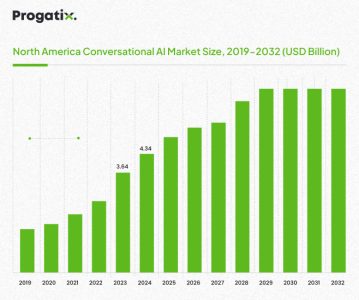
Enter AI-powered voice agents: intelligent systems that understand natural language, respond empathetically, and escalate to human agents when needed. These solutions aren’t just automating call routing, they’re reimagining the entire customer experience. The global conversational AI market reflects this rapid adoption: it was valued at USD 12.24 billion in 2024 and is projected to grow from USD 14.79 billion in 2025 to USD 61.69 billion by 2032, exhibiting a CAGR of 22.6% during the forecast period (Fortune Business Insights, 2025).
Among the most well-known players in this space is PolyAI, but many businesses are now exploring alternatives that offer more transparency, flexibility, and control.
This blog will explore what PolyAI is and why companies use it, where it falls short and why businesses seek alternatives, the key factors to consider when choosing a voice AI platform, the top PolyAI alternatives in 2025, and how Progatix offers a flexible, developer-friendly solution similar to Poly AI.
What Is PolyAI?
PolyAI is a conversational AI platform designed primarily for voice agents. Its core offering is a voice-bot that can handle real phone calls via the Public Switched Telephone Network (PSTN). Rather than lame, button-based IVRs, PolyAI’s bots can converse, understand, and execute tasks like:
- Account lookups – retrieving customer data
- Payments – processing or guiding users through payments
- Appointment scheduling – arranging or changing bookings
- Troubleshooting – diagnosing common issues
These bots are able to understand accented speech, engage in multi-turn dialogue, and integrate into existing contact center systems like CRMs or customer-service platforms. They also support smooth hand-offs: when necessary, PolyAI can escalate a call to a human agent in a way that preserves conversational context.
For enterprises, especially contact-center-centric organizations, PolyAI offers a way to automate repetitive, routine tasks and improve efficiency, reduce wait times, and free up agents for more complex service. That said, while PolyAI has strong capabilities, it’s not always the perfect fit—for reasons many buyers are now reconsidering.
Why Are Businesses Considering Alternatives to PolyAI?
While PolyAI is a strong platform, several factors motivate businesses to explore alternatives:
1. Pricing Transparency Issues
PolyAI doesn’t publish per-minute or usage-based rates. Enterprises must negotiate through sales teams, which can make cost planning difficult, especially at high volumes (50k–200k minutes per month). Modern alternatives now often provide clear rate cards or token-based pricing.
2. Latency Concerns
On PSTN calls, PolyAI’s response can take up to three-quarters of a second, which may make conversations feel unnatural. Newer platforms emphasize faster response times, improving barge-in performance and conversational fluidity.
3. Limited Barge-In Capabilities
“Barge-in” allows callers to interrupt the bot mid-sentence. PolyAI supports this, but slight delays can make the interaction feel clunky. Competitors now offer near-instant interruption recognition.
4. Multilingual and Accent Support
Although PolyAI supports multiple languages, some users report struggles with regional accents or informal speech, especially in noisy environments. Alternatives often leverage larger, more diverse datasets to enhance accuracy.
5. Managed Telephony Integrations
PolyAI handles telephony setups (e.g., Twilio, Genesys) internally, limiting the control developers have over call routing, transfers, or integrations. Developer-first alternatives allow more hands-on configuration.
6. Lack of Model Flexibility
You cannot choose which LLM or speech engine powers PolyAI. In contrast, platforms like Retell AI let you swap providers (OpenAI, Anthropic, Google) for natural language understanding or text-to-speech.
7. Limited Analytics
PolyAI provides basic dashboards, transcripts, and call summaries, but some companies want real-time sentiment analysis, intent drift detection, and agent-assist recommendations. Competitors often deliver more detailed reporting and export options.
Have an AI app idea? Get a free consultation
Let's Connect
Key Capabilities to Look for in AI Voice Agent Platforms
Before diving into the top alternatives, it’s useful to define what matters when choosing a voice AI platform. Here are seven critical evaluation criteria:
-
Telephony Fit
How does the system connect to phone lines? Does it support standard protocols (SIP, SBC)? Can it integrate with existing CCaaS solutions like Twilio, Genesys, NICE, or Avaya? Does it allow warm transfers from bot to human?
-
Latency / Barge-In
Real-time conversation demands low latency, ideally under ~800 ms round-trip from user-speak to bot response. Barge-in (interrupting the bot mid-sentence) must be smooth and immediate.
-
Model and Engine Flexibility
Can you choose or swap out the LLM or speech engine? Do you have options like OpenAI, Google, Anthropic? Can you plug in different ASR (automatic speech recognition) or TTS (text-to-speech) providers?
-
Data & Security Controls
Where is your data stored? What compliance and security standards are in place (e.g., GDPR, SOC 2, ISO 27001, PCI/HIPAA)? Can sensitive data (e.g., credit card numbers) be redacted?
-
Integration Capability
Does the platform provide out-of-the-box connectors for the tools you already use (CRM, helpdesk, chat systems)? If not, is there a robust API for custom integration?
-
Pricing Model & Transparency
Are the costs predictable and public? Is pricing based on minutes, tokens, requests? Is there a free tier, trial credits, or transparent per-minute billing?
-
Proof-of-Concept / POC Support
Can you test the system easily? Does the provider offer free credits, a sandbox, or open-source version? A POC should let you test true voice latency, quality, and integration in your own environment.
Top PolyAI Alternatives (2025)
Here are seven of the most compelling alternatives to PolyAI in 2025, based on frequent enterprise use, flexibility, and self-service capabilities:
-
Cognigy
Overview:
Cognigy is an enterprise-grade conversational AI platform with strong telephony and contact center capabilities. It supports SIP trunks and has direct integrations with CCaaS systems like Genesys, Amazon Connect, and more.
Strengths:
- Full control of telephony setup (SIP)
- Barge-in and voice flow control are mature and customizable
- Voice tuning and latency improvements regularly updated
- Data residency options (e.g., EU hosting) for compliance-conscious organizations
- Rich analytics and conversation transcripts
Trade-offs:
- Requires some expertise to build complex flows
- Might be more complex to set up than no-code or SDK-first tools
Fit for Use:
Best for large enterprises that need tight telephony control, data governance, and advanced agent hand-off logic.
-
Kore.ai
Overview:
Kore.ai offers a unified platform for both voice and chat bots. It provides a low-code/no-code builder, analytics, version control, and prebuilt connectors. Twilio Voice is a supported channel, along with other voice gateways.
Strengths:
- Intuitive builder makes it accessible for non-developers
- Supports Twilio or self-managed voice deployment
- Includes robust NLU, dialog management, and analytics
- Ongoing updates improve barge-in, voice tuning, and latency
- Flexible for internal (HR, IT) and external customer assistant use
Trade-offs:
- For very advanced IVR logic or heavy custom use cases, engineering effort is still needed
- Some enterprise features may require more custom development
Fit for Use:
Ideal for companies wanting a balance of technical control and ease-of-use, especially if they want bot deployment across chat and voice.
-
AWS: Amazon Lex + Amazon Connect
Overview:
Amazon Lex handles the conversational NLU, and Amazon Connect acts as the telephony system. This native AWS stack offers deep integration, pay-as-you-go billing, and security built on AWS infrastructure.
Strengths:
- Free-tier options (for pilots) reduce initial risk
- Tight integration with other AWS services (Lambda, DynamoDB, S3, etc.)
- Highly scalable and secure
- Full control over IAM, data access, and architecture
Trade-offs:
- Setup requires development effort
- Barge-in and latency may need careful tuning
- Voice quality and expressiveness depend on the Lex model; might require additional fine-tuning
Fit for Use:
Perfect for companies already deeply invested in AWS, or developers who want maximum control and integration flexibility.
-
Google Dialogflow CX
Overview:
Dialogflow CX is Google Cloud’s conversational AI aimed at complex, multi-turn voice and chat interactions. It supports telephony via SIP or Twilio, and leverages Google’s robust NLU and speech recognition technologies.
Strengths:
- Visual state-based flow builder: easy to model multi-step conversations
- Excellent NLU capabilities for complex dialogues
- Support for SIP/SBC integrations, including mTLS (mutual TLS)
- Google Cloud security and global infrastructure
- Trial credits make it easier to validate usage
Trade-offs:
- Phone gateway numbers may be limited geographically
- Requires building CX integrations and CRM handoffs yourself
Fit for Use:
Ideal for teams that want to prototype and deploy scalable voice bots on Google Cloud, especially when multi-channel (voice + chat) support is needed.
Get a quick quote for your AI-powered app
Let's Connect-
IBM Watson Assistant (WatsonX)
Overview:
IBM’s Watson Assistant is a well-known AI platform with a focus on data privacy, enterprise control, and governed AI. It can connect to phone systems via SIP through providers like Twilio or Genesys.
Strengths:
- Strong compliance and data residency support
- Auditability and governance: changes are trackable, data usage is controlled
- Enterprise-grade stability and reliability
- Low-code builder with NLU, dialog management, and voice capabilities
Trade-offs:
- Pricing tends toward the enterprise side
- Developer support may not always be as fast as newer startups
- Integrations for advanced flows may require technical work
Fit for Use:
Great for regulated industries (banking, healthcare), internal helpdesks, or compliance-heavy contact centers.
-
Genesys Cloud AI
Overview:
Genesys Cloud AI is part of the Genesys Cloud CX platform, offering built-in voice bots, routing, agent assist, and analytics. Because it sits inside a full contact center suite, it benefits from tight coupling with queues, predictive routing, and omnichannel data.
Strengths:
- Native integration into Genesys Cloud CX (routing, QA, escalation)
- Token-based usage with published SLAs and global availability
- Real-time transcription, sentiment analysis, and agent assist
- Built-in analytics, quality assurance, and escalation paths
Trade-offs:
- If you’re not already on Genesys Cloud, adoption may be more complex
- Token usage needs to be carefully managed to avoid cost surprises
- Feature rollouts depend on Genesys’ release schedule
Fit for Use:
Ideal for contact centers already onboard with Genesys Cloud or for companies that want a unified platform (AI + routing + agents + analytics).
-
Retell AI
Overview:
Retell AI is developer-focused and optimized for real-time, low-latency voice interactions. It supports Twilio and SIP, and offers transparent per-minute pricing along with free credits for proof-of-concept trials.
Strengths:
- Clear, per-minute pricing (no hidden fees)
- Very low latency (~620 ms), enabling natural conversational flow
- Real-time audio streaming, keypad input, SMS integration, and call data export
- Flexible toolkit approach – build exactly what you need
Trade-offs:
- SMS integration may be regionally limited (e.g., US-only)
- Not a full suite – you need to build analytics, CRM hooks, escalation logic yourself
- Requires technical know-how to get the most out of the API
Fit for Use:
Perfect for rapid prototyping, developer teams that want control, or product teams building voice-first experiences with precise latency and integration requirements.
How to Choose the Right PolyAI Alternative?
Picking the right platform isn’t just about features, it’s about fit. Here’s a decision framework to guide you:
-
Assess Your Telephony Needs
-
-
- Do you need SIP/SBC?
- Are you using Twilio or a CCaaS provider already?
- Do you want to self-manage the telephony stack, or let the vendor handle it?
-
-
Test for Latency
-
-
- Make real test calls, not just browser demos.
- Try interrupting the agent mid-sentence (barge-in) and measure response time.
- Simulate real-world conditions (accent, background noise, fast speech).
-
-
Decide on Model Flexibility
-
-
- Do you need to choose which LLM powers the conversation?
- Do you want to bring your own ASR / TTS provider (e.g., ElevenLabs, Google, AWS)?
- Do you expect to iterate quickly or swap models later?
-
-
Prioritize Data Privacy & Security
-
-
- Where is your conversation data stored?
- Does the vendor support GDPR, PCI, HIPAA, or SOC 2?
- Can you redact or automatically delete sensitive data (e.g., credit card numbers)?
-
-
Evaluate Integration Options
-
-
- Does the platform have built-in connectors for your CRM, helpdesk, or chat tools?
- If not, how flexible is the API?
- How easy is it to build automated workflows (e.g., scheduling, CRM updates) triggered by voice interactions?
-
-
Understand Pricing Mechanics
-
-
- Is pricing based on minutes, tokens, or requests?
- Does the vendor publish transparent rates or hide behind sales quotes?
- Is there a free tier, trial credits, or pay-as-you-go model to run a proof of concept?
-
-
Run a Proof-of-Concept (POC)
-
- Use a small-scale POC to validate latency, voice quality, integration, and user experience.
- Make real calls, run through common customer journeys, test transfers to humans.
- Use the insights from the POC to decide which platform scales best for your business.
Challenges and How to Overcome Them
Even the best voice AI platforms face real-world challenges. Understanding them helps you choose and implement the right solution.
-
Latency and Natural Conversation Flow
Issue: Delays in response can make conversations feel robotic.
Mitigation: Test response times on live calls. Aim for <800 ms from end of speech to AI reply. Optimize by using low-latency streaming APIs and edge deployments.
-
Accent and Language Variability
Issue: AI may struggle with regional accents, slang, or background noise.
Mitigation: Select platforms trained on diverse datasets. Run real-world pilot calls including accented speakers and noisy environments.
-
Integration Complexity
Issue: Connecting AI to your CRM, helpdesk, or telephony system can be tricky.
Mitigation: Choose platforms with ready-made connectors or robust APIs, and allocate time for proof-of-concept testing.
-
Data Privacy and Compliance
Issue: Handling sensitive customer data introduces regulatory risks.
Mitigation: Verify GDPR, SOC 2, HIPAA, ISO 27001 certifications. Use auto-redaction for sensitive information during calls.
-
Scalability and Unexpected Costs
Issue: Token or per-minute pricing may escalate as call volume grows.
Mitigation: Map projected usage against pricing tiers. Consider vendor transparency and pilot credits before full rollout.
We develop smart AI and mobile apps connect now.
Let's ConnectCommon Issues with Voice AI and Mitigation Strategies
This section is similar but framed as practical guidance:
- Poor barge-in performance: Test mid-sentence interruptions. Use platforms with <1 second interruption response.
- Limited analytics: Choose platforms offering real-time sentiment analysis, intent tracking, and exportable dashboards.
- Model rigidity: Select vendors allowing LLM or TTS engine swaps to optimize for your use case.
- Managed-only telephony: If you need hands-on control, opt for developer-first platforms supporting SIP/CCaaS integrations.
Why PolyAI May Still Work for Some Enterprises
Despite the limitations discussed, PolyAI remains a strong option for specific scenarios:
- Enterprises requiring pre-built, branded voice agents with natural turn-taking
- Organizations that prefer managed telephony setup and minimal developer involvement
- Businesses that value turnkey integrations with Twilio, Genesys, or NICE without configuring complex APIs
- Companies that prioritize general-purpose AI voice over complete control or self-hosted flexibility
In short: PolyAI works best for businesses that prioritize simplicity, quick deployment, and a fully managed solution rather than deep customization or developer control.
Why Some Businesses Might Still Choose PolyAI?
Even as Progatix and other alternatives gain traction, PolyAI continues to be a viable choice, and in certain cases, it still makes sense. Here are scenarios where PolyAI may be preferable:
- Enterprise Scale with Legacy CCaaS: If your company is deeply embedded within a PolyAI / Genesys / enterprise contact center model, and you rely on managed telephony and vendor-led integration, PolyAI’s turnkey nature may be advantageous.
- Dedicated Voice Automation Partner: For organizations that prefer a vendor to handle the telephony infrastructure and to completely outsource bot setup, PolyAI’s managed service may be less risky than doing it in-house.
- Standardization Over Flexibility: If you don’t need to choose your LLM, ASR, or TTS provider and prefer a more “plug-and-play” solution, then PolyAI’s closed system might actually simplify ops.
- Long-term Enterprise Deals: For large-scale contracts, custom SLAs, and enterprise-level support, PolyAI may offer compelling benefits that outweigh flexibility drawbacks.
Final Words
PolyAI has pioneered the conversational voice bot space, enabling enterprises to transform customer service lines into intelligent, automated experiences. Its ability to understand accented speech, conduct multi-turn dialogues, and escalate to human agents has made it a go-to for many contact centers.
However, in 2025, alternatives like Cognigy, Kore.ai, Amazon Lex + Connect, Google Dialogflow CX, IBM Watson Assistant, Genesys Cloud AI, and Retell AI are offering compelling reasons to consider other paths, especially when flexibility, transparency, and control matter.
Custom Voice AI Solutions Designed Like PolyAI, Powered by Progatix
Progatix isn’t just another off-the-shelf voice AI platform. Leveraging decades of experience in AI, automation, cloud architecture, and high-performance software, Progatix can design and build a fully custom voice automation system that mirrors, and even surpasses, the capabilities of PolyAI, tailored precisely to your business needs.
With Progatix, organizations gain:
- A completely bespoke voice AI assistant
- Entire control over technology stack (choice of ASR, LLM, TTS)
- Seamless integration with existing internal systems
- Freedom from restrictive enterprise licensing models
- A scalable solution that becomes your owned intellectual property
This makes Progatix a persuasive choice for businesses looking for a flexible, enterprise-grade alternative to PolyAI.
Why Progatix Is a Strong Alternative to PolyAI?
- Custom Development of PolyAI-Level Voice AI Systems
With 20+ years of engineering excellence, Progatix builds fully customized voice AI systems designed around your exact workflows, unlike PolyAI’s fixed platform model.
Your business gets a tailor-made voice agent, including:
- Fully branded voice identity
- Custom conversation logic
- Bespoke integrations with your internal systems
- Choice of AI frameworks (OpenAI, ElevenLabs, Google & more)
- Complete ownership of your architecture
You benefit from PolyAI-grade performance without platform limitations or vendor lock-in.
- Enterprise Expertise That Outperforms Standard Platforms
Progatix is trusted globally because of its:
- 20+ years of enterprise software development
- Proven excellence in automation, AI, SaaS, cloud, and integration
- Track record of delivering mission-critical digital solutions
This makes Progatix an ideal partner for enterprises needing more flexibility, depth, and control than an out-of-the-box voice bot can offer.
- A Broad Ecosystem of High-End Technology Services
Beyond voice AI, Progatix provides a complete suite of enterprise-grade digital solutions, enabling end-to-end automation and modernization:
- SaaS Development: Scalable platforms that accelerate digital growth
- Web Development: Custom enterprise web systems engineered for performance
- Enterprise IT Services: Full lifecycle management from planning to deployment
- Software Development: Two decades of industry-leading custom software delivery
- ERP Development: Process automation, centralized data, and smarter workflows
- Mobile App Development: Modern, intuitive mobile experiences for customers and teams
This breadth allows Progatix to build a complete voice automation ecosystem, not just a single tool.
- 100% Tailored Voice Assistants
Progatix develops voice AI solutions that adapt to your processes — not the other way around. Your system can:
- Understand complex or industry-specific queries
- Automate multi-step tasks
- Interact with back-office systems in real-time
- Execute workflows based on your organizational logic
This level of customization is far beyond what off-the-shelf voice AI platforms can provide.
- Built for Enterprise Scalability
Progatix designs voice AI systems built to grow with your business:
- Handles high call volumes
- Supports multi-language deployments
- Integrates with both cloud and on-prem environments
- Optimized for long-term reliability and enterprise performance
For organizations prioritizing robustness, scalability, and security, Progatix stands out as a powerful alternative to PolyAI.
Choosing the right voice AI is not just about technology, it’s about designing an experience for your customers that feels natural, efficient, and human. By carefully evaluating latency, data controls, integration, and cost, and by testing via a POC, you can future-proof your customer interactions and build a voice agent solution that scales with confidence.
If you’re ready to explore how Progatix can serve as a potential, flexible alternative to PolyAI for your business, we’d be happy to walk you through a demo or proof-of-concept tailored to your needs.
Want an AI-powered app? Let’s build it
Let's Connect


 Let's Discuss Your Tech Solutions