Software Development In The Pharmaceutical Sector: Full Guide Software Development
Software development in the pharmaceutical sector is reshaping how drugs are researched, manufactured, regulated, and delivered by embedding digital solutions across the entire pharma lifecycle. From clinical software applications and lab management systems to drug manufacturing software, pharmaceutical ERP software, and regulatory compliance platforms, modern pharma software improves efficiency, accuracy, and compliance in a highly regulated environment. Powered by cloud computing, AI-driven analytics, secure data architectures, and automation, these solutions accelerate drug discovery, reduce development costs, strengthen supply chain visibility, enhance patient engagement, and ensure FDA and global regulatory adherence. This guide provides a complete view of pharmaceutical software development, covering its benefits, regulatory frameworks, system types, essential features, development process, challenges, and future trends shaping digital transformation in the pharmaceutical industry.
Introduction
The pharmaceutical industry stands at the intersection of science, healthcare, and technology. As global demand for faster drug development, better patient outcomes, and stricter regulatory oversight increases, digital transformation has become unavoidable. Software development in the pharmaceutical sector is no longer optional; it is a foundational element for innovation, efficiency, and compliance.
From early-stage drug discovery to large-scale manufacturing, distribution, and patient engagement, pharmaceutical software solutions are redefining how the industry operates. Whether it is clinical software applications for trials, drug manufacturing software for production control, or AI-driven analytics for research, technology is now embedded in every stage of the pharma lifecycle.
This comprehensive guide explores the full scope of pharma software development, what it includes, why it matters, the regulations it must follow, the benefits it delivers, the types of systems used, must-have features, development steps, challenges, real-world examples, and future trends. By the end, you’ll have a complete theoretical foundation to understand and plan pharmaceutical software projects with confidence.
Transform pharma operations with custom software
Let's Connect
Understanding Pharmaceutical Software Development
At its core, pharmaceutical software development refers to the creation of digital tools and platforms designed specifically for the pharmaceutical ecosystem. These tools support processes related to drug research, formulation, clinical trials, manufacturing, quality control, supply chain management, compliance, and patient interaction.
Pharmaceutical software solutions are not limited to enterprise environments alone. While many platforms serve large pharma companies, others target pharmacies, hospitals, laboratories, healthcare professionals, and even patients. Applications can range from desktop systems used in manufacturing plants to mobile apps for medication reminders and e-prescriptions.
Unlike generic healthcare software development, pharma-focused systems often deal with highly specialized workflows, strict regulatory requirements, and sensitive scientific data. This makes medical software development in this sector both technically complex and strategically critical.
Why Software Is Essential to the Pharmaceutical Industry
The pharmaceutical sector is data-heavy, regulation-driven, and time-sensitive. Developing a new drug can take years and cost billions of dollars. Software helps reduce these burdens by improving accuracy, efficiency, and decision-making across operations.
Modern pharma software development in the USA and other major markets plays a pivotal role in:
- Accelerating drug discovery and research
- Managing large volumes of clinical and laboratory data
- Ensuring regulatory adherence
- Improving production efficiency
- Enhancing transparency across supply chains
- Strengthening patient services and engagement
Because pharmaceutical software impacts research labs, manufacturing plants, logistics teams, compliance officers, and healthcare providers simultaneously, it occupies a unique position within the broader healthcare technology landscape.
Regulatory Frameworks and Compliance Requirements
One of the defining characteristics of software development in the pharmaceutical sector is regulation. Pharma systems must comply with national and international laws designed to protect patient safety, data privacy, and product quality.
Depending on the region and use case, pharmaceutical software may need to adhere to:
- HIPAA for patient data protection
- GDPR for data privacy and user rights
- FDA guidelines for digital systems used in drug development and trials
- Regional healthcare and pharmaceutical regulations
FDA-compliant software is particularly important for systems involved in clinical trial software, drug manufacturing software, and quality assurance. Regulatory bodies frequently update requirements in response to technological advancements, which means compliance is an ongoing responsibility, not a one-time task.
Because of this complexity, pharmaceutical companies often rely on experienced healthcare software development teams that understand regulatory landscapes and compliance-by-design principles.
Develop secure, regulation-ready pharma systems
Let's ConnectMarket Overview and Industry Statistics
The pharmaceutical software market is experiencing strong and sustained growth as digital transformation accelerates across the global pharmaceutical industry. According to Credence Research, the pharmaceutical software market size was valued at USD 33.79 billion in 2024 and is projected to reach USD 64.41 billion by 2032, growing at a compound annual growth rate (CAGR) of 8.4% during the forecast period.
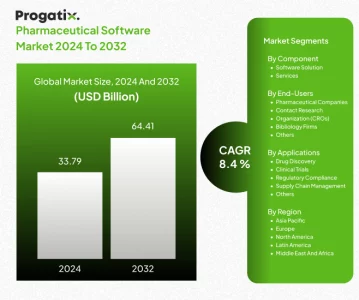
This expansion reflects the increasing reliance on digital platforms to support drug research, manufacturing, regulatory compliance, and patient engagement. Pharmaceutical organizations are investing heavily in modern software systems to improve operational efficiency, manage complex data environments, and meet evolving regulatory requirements.
Cloud-based infrastructure continues to play a central role in this growth, offering scalability, cost optimization, and faster deployment for organizations operating across multiple regions. As pharmaceutical companies handle larger volumes of clinical, manufacturing, and supply chain data, flexible and secure software architectures are becoming essential.
Overall, continued advancements in automation, analytics, and AI-driven capabilities are expected to further strengthen the adoption of pharmaceutical software solutions in the years ahead, positioning digital technology as a core driver of innovation across the sector.
Key Benefits of Pharmaceutical Software Development
The rapid adoption of pharma software development is driven by its ability to deliver measurable value across pharmaceutical research, manufacturing operations, regulatory compliance, and patient care. As the industry becomes increasingly data-driven and regulated, pharmaceutical software solutions play a critical role in maintaining efficiency, accuracy, and trust.
-
Reduced Research and Development Costs
Drug research is traditionally expensive and time-intensive. Digital platforms developed through healthcare software development streamline laboratory workflows, automate data collection, and reduce human error during experimentation and testing. By optimizing resource allocation and improving trial success rates, pharmaceutical companies can significantly lower the overall cost of developing new medications. Advanced clinical software applications also minimize redundant testing by enabling better data reuse and collaboration across teams.
-
Faster Drug Commercialization
Speed to market is a competitive advantage in the pharmaceutical sector. Through automated analytics, centralized databases, and improved collaboration between research, regulatory, and production teams, pharmaceutical software shortens the path from early discovery to commercial release. Tools such as clinical trial software and drug manufacturing software help eliminate delays, allowing organizations to introduce safe and effective drugs to patients faster.
-
Simplified Compliance Management
Regulatory adherence is non-negotiable in pharmaceuticals. Regulatory compliance software helps companies track evolving regulations, maintain audit-ready documentation, and ensure processes align with FDA and global standards. Well-designed FDA-compliant software reduces the risk of penalties, recalls, and legal challenges while simplifying inspections and approvals.
-
Enhanced Data Security
Pharmaceutical organizations handle sensitive research data, patient records, and intellectual property. Robust security frameworks, including encryption, identity management, and controlled access, are essential. Modern medical software development emphasizes data protection through secure architectures that safeguard confidential information against breaches and cyber threats.
-
Improved Patient Engagement
Digital health tools empower patients while reducing operational strain on healthcare providers. Patient management software, e-prescription software, and telemedicine software solutions improve communication, accessibility, and treatment adherence. These tools integrate seamlessly with hospital management software and electronic health record (EHR) software, ensuring continuity of care across touchpoints.
-
Data-Driven Optimization
Pharmaceutical software enables data-driven decision-making at every stage of the drug lifecycle. Advanced analytics help researchers refine formulations, identify potential side effects earlier, and improve therapeutic effectiveness. This analytical capability strengthens product quality while reducing costly late-stage failures.
-
Centralized Information Management
Drug development generates massive volumes of clinical, laboratory, and operational data. Pharmaceutical software solutions centralize this information into structured, searchable systems, enabling faster access, better collaboration, and improved knowledge retention across departments and locations.
-
AI-Enhanced Research Capabilities
The integration of AI in pharmaceutical software is transforming research and development. Machine learning models identify patterns in trial data, predict outcomes, and highlight anomalies that may be missed by human analysis. AI-driven insights accelerate discovery, improve accuracy, and enhance overall research productivity.
Types of Software Used in the Pharmaceutical Sector
The pharmaceutical industry depends on a wide range of specialized systems, each designed to support a specific operational or clinical function. Together, these platforms form a comprehensive digital ecosystem.
-
Pharmaceutical ERP Software
Pharmaceutical ERP software serves as the backbone of enterprise operations. It integrates finance, procurement, production planning, human resources, and inventory into a single platform, enabling real-time visibility and informed decision-making across the organization.
-
Drug Manufacturing Software
Drug manufacturing software automates and monitors production processes, ensuring consistency, quality, and traceability. These systems manage equipment performance, batch records, scheduling, and maintenance while enforcing strict quality standards throughout manufacturing cycles.
-
Pharmacy Management System
A pharmacy management system supports day-to-day pharmacy operations by managing prescriptions, billing, patient records, and medication inventory. These platforms often integrate with e-prescription software and EHR systems to improve accuracy and patient safety.
-
Supply Chain Management for Pharma
Effective supply chain management for pharma ensures uninterrupted access to raw materials and controlled distribution of finished drugs. These solutions provide end-to-end visibility, helping companies manage suppliers, logistics, cold-chain requirements, and delivery timelines.
-
Regulatory Compliance Software
Pharmaceutical operations must meet stringent regulatory requirements. Regulatory compliance software automates documentation, monitors adherence, and supports audits, ensuring organizations remain compliant across regions and markets.
-
Lab Management Software
Lab management software organizes laboratory workflows, experiments, samples, and results. It improves operational efficiency, enhances data accuracy, and ensures compliance with regulatory and quality standards in research environments.
-
Clinical Trial Software
Clinical trial software manages trial design, participant recruitment, data collection, monitoring, and reporting. These platforms are critical for maintaining data integrity, ensuring patient safety, and accelerating regulatory approvals.
-
Quality Control Systems
Quality control software ensures that every batch meets predefined standards. By detecting deviations early and enforcing corrective actions, these systems prevent defective products from reaching the market and protect patient safety.
Create scalable software for pharmaceutical growth
Let's ConnectEssential Features of Pharmaceutical Software
To deliver real value, pharmaceutical software must include a set of core capabilities tailored to industry-specific requirements.
-
Drug Information Management
A centralized repository for drug profiles, ingredients, interactions, and safety data supports both research teams and healthcare providers.
-
E-Prescription Software
Secure e-prescription software enables digital prescribing while incorporating fraud prevention and validation mechanisms to protect patients and providers.
-
Drug Inventory Management
Accurate drug inventory management ensures optimal stock levels, reduces waste, and prevents shortages across production and distribution channels.
-
Regulatory Compliance Monitoring
Built-in compliance monitoring tools generate alerts, reports, and documentation to support continuous adherence to regulatory standards.
-
Patient Communication Tools
Integrated communication features enable feedback collection, treatment reminders, and direct engagement through patient management software.
-
Advanced Analytics and Reporting
Analytics dashboards provide insights into research outcomes, operational performance, and market trends.
-
Barcode Scanning
Barcode scanning enhances verification, reduces errors, and improves traceability across manufacturing and logistics processes.
-
End-to-End Encryption
Strong encryption protects data at rest and in transit, supporting secure healthcare software development practices.
-
Item Traceability
Full traceability ensures transparency across the supply chain, helping detect counterfeit products and ensure compliance.
-
AI-Powered Trial Analysis
AI-driven analysis accelerates insights from clinical trials, improving accuracy and reducing time-to-market.
-
Batch Control Systems
Automated batch tracking ensures consistent quality and supports recall readiness if issues arise.
-
Billing and Invoicing Modules
Integrated financial tools streamline billing, invoicing, and reimbursement processes across pharma operations.
Step-by-Step Pharmaceutical Software Development Process
Building reliable and scalable pharmaceutical platforms requires a structured and regulation-first approach. Successful pharma software development combines deep industry knowledge with proven software engineering methodologies to ensure safety, compliance, and long-term usability.
Step 1: Market Research and Scope Definition
The foundation of effective pharmaceutical software solutions lies in comprehensive market research. This stage focuses on identifying the target audience, such as pharmaceutical manufacturers, research labs, pharmacies, or healthcare providers, along with their operational challenges and expectations.
Competitive analysis helps determine how existing clinical software applications, drug manufacturing software, or pharmacy management system solutions operate and where gaps exist. Defining core features early also ensures alignment with long-term business objectives and regional considerations, particularly for pharma software development in the USA, where regulatory expectations are stringent.
Step 2: Regulatory Assessment and Compliance Planning
Regulatory planning is critical in medical software development, especially when handling patient data, clinical trials, or manufacturing processes. At this stage, development teams identify applicable standards such as FDA regulations, HIPAA, and GDPR.
Embedding compliance requirements early helps ensure the final product qualifies as FDA-compliant software. Regulatory compliance software principles are applied throughout architecture design, documentation, access control, and data handling workflows, minimizing costly revisions later in the lifecycle.
Step 3: UX/UI Design
Pharmaceutical systems often involve complex workflows, but usability should never be compromised. During this phase, designers create intuitive user interfaces that simplify tasks such as drug inventory management, laboratory reporting, or trial monitoring.
Effective UX design is particularly important for platforms like clinical trial software, lab management software, and integrated pharmaceutical ERP software, where multiple stakeholders interact with the system daily. Clean interfaces reduce errors, improve adoption, and enhance productivity.
Step 4: Development and Iteration
The development phase brings planned features to life through iterative implementation. Core functionalities, such as data processing, analytics, reporting, and workflow automation, are built and refined based on real-world usage scenarios.
Agile methodologies allow teams to collect early feedback from users of healthcare software development systems, ensuring the platform evolves in alignment with operational needs. Iterative development also supports integration with related tools such as E-prescription software or supply chain management for pharma platforms.
Step 5: Testing and Validation
Testing is essential to guarantee accuracy, reliability, and security. Pharmaceutical software undergoes functional, performance, and security testing using diverse datasets to simulate real-world conditions.
Validation is particularly important for clinical trial software, drug manufacturing software, and systems that integrate with electronic health record (EHR) software. This stage ensures the platform meets regulatory expectations, maintains data integrity, and performs consistently under load.
Step 6: Deployment and Ongoing Support
After successful validation, the software is deployed in a controlled production environment. Post-launch monitoring helps track performance, detect anomalies, and ensure continuous compliance.
Ongoing support includes updates for regulatory changes, feature enhancements, and security patches. This long-term commitment is crucial for maintaining trust and relevance in pharmaceutical software solutions.
Ensure compliance with pharma software solutions
Let's ConnectRecommended Technology Stack for Pharmaceutical Software Development
A modern pharmaceutical platform requires a scalable and secure technology foundation. While specific choices vary by project, the following stack supports most pharma software development initiatives:
- Programming Languages: JavaScript, Python, Ruby
- Frontend: HTML, CSS, React, Vue.js
- Backend: Django, Nest.js, Ruby on Rails, Serverless architectures
- Databases: PostgreSQL, MySQL, MongoDB
- Data Processing: Pandas, NumPy for analytical workloads
- Cloud Platforms: AWS, Microsoft Azure, Google Cloud
- Security: SSL/TLS encryption, IAM, OAuth, JWT authentication
- Testing Tools: Selenium, Cypress, pytest
- CI/CD Pipelines: Jenkins, GitLab CI/CD, AWS CodePipeline
This stack supports integration with hospital management software, laboratory systems, and enterprise tools while maintaining compliance and scalability.
Key Challenges in Pharmaceutical Software Development
One of the most significant challenges in pharma software development is data security. Pharmaceutical platforms handle sensitive medical records, research data, and proprietary formulas, making robust encryption and access controls essential components of secure healthcare software development.
Regulatory compliance is another major hurdle. Systems must support data portability, deletion, and audit readiness to meet laws such as GDPR and FDA requirements. Failing to address compliance early can delay approvals and increase costs, especially in pharma software development in the USA.
Additionally, insufficient market research can undermine otherwise well-built software. Without a deep understanding of user needs, workflows, and industry trends, even advanced medical software development projects may struggle to gain adoption.
Real-World Pharmaceutical Software Examples
-
SIMATIC SIPAT
SIMATIC SIPAT, developed by Siemens, focuses on reducing errors and accelerating drug development cycles. The platform enhances process control in manufacturing and clinical environments, helping organizations deliver high-quality products more efficiently.
-
Labguru
Labguru is a widely used lab management software that improves laboratory productivity by organizing experiments, samples, and workflows. Its emphasis on transparency and usability makes it a strong example of practical pharmaceutical software implementation.
-
Oracle Clinical
Oracle Clinical is a large-scale clinical software application designed for managing data collection, anonymization, and analysis in clinical trials. It demonstrates how enterprise-grade systems can support complex research operations while maintaining regulatory compliance.
The Future of Pharmaceutical Software
The future of pharmaceutical technology will be shaped by advanced automation and intelligent systems. AI in pharmaceutical software will continue to enhance analytics, predict outcomes, and streamline research and manufacturing processes.
Emerging technologies such as blockchain may improve data traceability and integrity, while IoT integrations will enable real-time monitoring across production facilities and wearable health devices. As digital health ecosystems mature, pharmaceutical platforms will increasingly integrate with electronic health record (EHR) software, hospital management software, and telemedicine software solutions to deliver seamless, patient-centered care.
Bottom Line
Software development in the pharmaceutical sector is transforming how drugs are researched, produced, regulated, and delivered. By combining advanced technology with regulatory awareness, pharmaceutical organizations can achieve greater efficiency, transparency, and patient trust. As innovation accelerates, investing in robust, compliant, and future-ready pharmaceutical software solutions is no longer a choice; it is a necessity.
How Progatix Can Support Pharmaceutical Software Development?
Progatix, a next-gen custom software development company with over two decades of experience, builds secure, scalable, and regulation-ready solutions for the pharmaceutical industry. Specializing in healthcare and medical software development, Progatix helps organizations streamline research, manufacturing, compliance, and patient engagement.
From clinical trial management systems and laboratory software to AI-powered analytics and FDA-compliant applications, Progatix delivers tailored solutions that combine technical excellence with deep industry insight. These solutions are designed to meet the unique operational and regulatory needs of pharmaceutical companies, ensuring efficiency and accuracy across critical workflows.
Progatix’s capabilities include custom software development for specialized pharmaceutical processes, ERP systems that centralize and automate operations, and mobile apps that enhance accessibility, analytics, and user engagement. Additionally, their scalable web and SaaS platforms optimize collaboration and operational efficiency, while comprehensive enterprise IT services provide full-cycle support to maintain compliance and digital resilience.
With Progatix, pharmaceutical companies can accelerate digital transformation, optimize workflows, and drive innovation, all while maintaining strict regulatory compliance.
Build compliant pharmaceutical software with experts
Let's Connect


 Let's Discuss Your Tech Solutions