Telecommunications App Development: A Complete Guide Software Development

The telecommunications industry is rapidly evolving, driven by mobile data growth, 5G networks, and customer demand for always-on digital services. Custom telecom apps have become essential for providers to enhance customer experiences, streamline operations, and unlock new revenue streams. From self-care portals and VoIP apps to cloud-based and AI-powered solutions, these apps enable seamless, real-time engagement across multiple devices. Investing in tailored telecom applications helps businesses improve efficiency, personalize services, reduce support costs, and stay competitive in a fast-changing market.
Introduction
The telecommunications industry has undergone a dramatic evolution over the past decade. Rapid growth in mobile data consumption, widespread smartphone adoption, cloud-based communication, and customer demand for always-on digital services have reshaped how telecom providers operate and engage with users. Voice and text services, once the backbone of telecom offerings, are now bundled into broader digital ecosystems that include data services, account management, analytics, and personalized customer experiences.
As wireless usage continues to surge across mobile networks (4G/5G), telecom operators and internet service providers (ISPs) are increasingly relying on telecommunications app development and cloud-based telecom apps to improve network efficiency, optimize service delivery, and unlock new revenue streams. Modern customers expect seamless, real-time access to telecom services, anytime, anywhere, and on any device. This shift has made telecom software development in the USA and globally a strategic necessity rather than an optional enhancement.
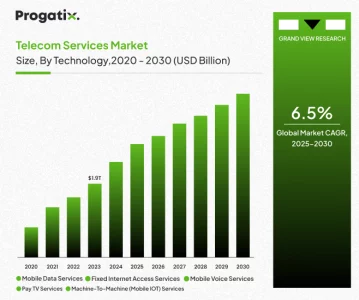
The global telecom services market was estimated at USD 2,095,716.3 million in 2025 and is projected to reach USD 2,874,755.8 million by 2030, growing at a CAGR of 6.6% from 2026 to 2030, according to Grand View Research. This massive growth underscores the increasing importance of digital solutions, including telecom mobile apps, VoIP apps, messaging platforms, unified communications apps, and 5G-enabled telecom apps, as service providers seek to capitalize on expanding demand and evolving customer expectations.
Custom telecom applications enable service providers to strengthen customer relationships, streamline internal operations, and differentiate themselves in an increasingly competitive market. This guide explores everything you need to know about telecom app development, from understanding what custom telecom apps are and how they function, to the benefits, features, development lifecycle, and how to choose the right development partner.
What Are Custom Telecommunications Apps?
Custom telecommunications apps are purpose-built digital platforms designed specifically for telecom service providers to deliver, manage, and enhance communication services. Unlike generic applications, these apps are tailored to a company’s operational model, customer base, and long-term growth strategy.
At their core, telecom apps act as digital service hubs where customers can access a wide range of offerings, including customer self-care portals, account management, usage tracking, billing, customer support, service upgrades, notifications, and value-added services. Rather than relying solely on call centers or physical stores, telecom companies can use apps to create a continuous digital connection with users.
These applications are not limited to customer-facing functionality. Internally, telecom apps can support workflow automation, telecom analytics, reporting, and integration with OSS systems, BSS systems, CRM systems, network provisioning, softswitch, and protocols like SIP and RTP.
In an era where personalization and convenience drive customer loyalty, a well-designed telecommunications app development project ensures that apps become a central touchpoint that keeps users engaged with your brand at all times.
The Role of Telecom Apps in Modern Business Growth
The telecommunications industry has undergone a fundamental shift driven by unlimited data plans, the widespread adoption of OTT communication platforms, and an increasingly digital-first customer mindset. Today’s consumers expect seamless, instant, and personalized interactions with their service providers. Long response times, unclear billing, limited account visibility, or disconnected support channels are no longer acceptable in a highly competitive telecom landscape.
As customer expectations continue to evolve, telecom providers must rethink how they engage users across digital touchpoints. Custom telecom applications play a critical role in bridging this gap by transforming traditional telecom services into intelligent, user-centric digital experiences.
Build scalable telecommunications apps with experts
Let's Connect
-
Meeting Customer Expectations Through Digital Enablement
Custom telecom apps empower customers by giving them continuous access to essential services and account information. Instead of relying on call centers or physical service locations, users can manage subscriptions, monitor usage, pay bills, and raise service requests directly through customer self-care portals. This always-on availability not only improves convenience but also strengthens customer trust and loyalty.
Real-time communication is another major advantage. Through VoIP apps, messaging platforms, push notifications, in-app alerts, and instant messaging, telecom businesses can keep users informed about service updates, usage thresholds, billing cycles, promotions, or network issues. This proactive approach reduces confusion, minimizes complaints, and enhances transparency.
-
Reducing Operational Load with Self-Service Capabilities
Self-service functionality has become a cornerstone of modern telecom applications. Features such as automated troubleshooting, FAQs, AI-powered telecom solutions, chatbot support, and guided workflows allow customers to resolve common issues independently. By reducing reliance on human support agents, telecom companies can significantly lower operational costs while improving response times and service consistency.
At the same time, customer service teams are freed up to focus on more complex, high-value interactions, improving overall service quality and internal efficiency.
-
Delivering Personalized Experiences at Scale
Personalization is a powerful driver of engagement and revenue growth. Custom telecom apps enable businesses to analyze user behavior, preferences, and usage patterns to deliver tailored content, offers, and recommendations. Whether it’s customized data plans, targeted promotions, or personalized notifications, this level of relevance helps increase conversion rates and customer retention.
-
Supporting Cross-Platform Accessibility
Modern telecom users expect a consistent experience across devices. Unified communications apps are designed to work seamlessly across mobile and web platforms, ensuring customers can access services anytime, anywhere. This cross-platform availability enhances usability while extending the provider’s digital presence across multiple touchpoints.
-
Enabling Smarter, More Efficient Operations
By centralizing customer interactions, data, and service management within a single digital platform, telecom apps improve operational visibility and decision-making. Businesses gain actionable insights into customer behavior, service performance, and operational bottlenecks, allowing them to optimize processes, improve network provisioning, and scale more efficiently.
Business Benefits of Custom Telecommunications App Development
Investing in telecommunications app development delivers measurable business value by transforming how telecom providers interact with customers and manage operations. A well-designed telecom app becomes a centralized digital channel that improves service delivery, strengthens customer relationships, and drives operational efficiency. Many telecom organizations experience higher customer retention, increased service adoption, and lower support costs after introducing a dedicated application tailored to their business needs.
-
Always-On Customer Access
Custom telecom apps give customers uninterrupted access to essential services, allowing them to manage their accounts at any time and from anywhere. Users can check data and call usage, review billing details, make payments, update plans, and submit service requests without needing to contact a call center or visit a physical outlet. This continuous availability improves convenience and enhances the overall customer experience while reducing dependency on traditional support channels.
-
Reduced Customer Support Workload
By integrating self-service features such as automated troubleshooting, interactive FAQs, AI-powered telecom solutions, and guided workflows, telecom apps significantly reduce the volume of support inquiries. Customers can resolve common issues independently, leading to fewer calls, emails, and live chat requests.
-
Stronger Customer Engagement and Retention
Custom telecom applications enable ongoing engagement through real-time communication channels. Push notifications, in-app alerts, and personalized messages keep users informed about usage limits, billing cycles, service updates, and exclusive offers. Personalized promotions based on customer behavior and preferences further enhance engagement, encouraging higher usage and long-term loyalty while reducing churn.
-
Seamless Multi-Device Accessibility
Modern telecom customers expect consistent access across multiple devices. 5G-enabled telecom apps and cloud-based telecom apps are designed to function smoothly on smartphones, tablets, and other connected devices, ensuring a unified experience regardless of platform.
-
Efficient Mass Communication Capabilities
Telecom apps enable providers to communicate with large customer bases instantly and efficiently. Bulk SMS, MMS, messaging platforms, and in-app messaging features allow businesses to share important updates, promotional campaigns, service outages, maintenance alerts, or policy changes in real time.
-
Integrated Social and Digital Ecosystem
Custom telecom applications can be integrated with CRM systems, social media platforms, payment gateways, and other third-party digital services. These integrations extend brand visibility, streamline customer interactions, and create a connected digital ecosystem.
Essential Features of a Custom Telecom App
Before starting the development of a telecom application, it is crucial to define a clear set of features that will maximize value for both the business and its customers. A well-planned feature set ensures that the app not only meets customer expectations but also serves as a strategic tool for growth, engagement, and operational efficiency. By thoughtfully integrating advanced features, telecom providers can leverage telecom software development in the USA or globally to create applications that truly differentiate their services in a competitive market.
-
Distinct Value Proposition
A custom telecom app should deliver a unique experience that sets it apart from generic or standard solutions in the market. Features that directly address customer pain points or enhance convenience, such as VoIP apps, messaging platforms, and unified communications apps, make the app an indispensable tool. Offering functionalities like real-time voice calls, secure messaging, video conferencing, or integrated chatbots ensures that users remain engaged, encouraging loyalty, frequent use, and higher overall satisfaction.
-
User-Friendly Navigation
Intuitive and well-structured navigation is critical for user adoption. Customers should be able to accomplish tasks such as checking their usage, updating their subscription plans, paying bills, or submitting support tickets in just a few taps. Clear menu hierarchies, search functionality, quick-access dashboards, and responsive layouts contribute to an efficient telecommunications app development experience that reduces frustration and enhances engagement.
-
High Performance and Speed
Performance is crucial for retaining users in telecom mobile apps. Slow loading times, frequent crashes, or unresponsive interfaces can negatively affect brand reputation. Optimizing app performance for mobile networks (4G/5G), cloud-based telecom apps, and cross-platform accessibility ensures smooth operation even during peak usage. Features like lightweight coding, offline mode, and fast backend processing improve reliability and deliver a seamless user experience.
-
Core Functional Features
A robust telecom app combines usability, performance, and strategic functionality to serve both business objectives and customer needs. Key features include:
- Account and Subscription Management: Customers can manage multiple lines, view detailed usage reports, and adjust plans effortlessly.
- Billing and Payment Integration: Real-time invoicing, multiple payment gateway options, auto-pay scheduling, and secure transactions streamline financial interactions.
- Usage Monitoring and Analytics (telecom analytics): Provides insights into data, voice, and messaging usage, enabling customers to manage their plans efficiently while giving providers actionable intelligence for personalized promotions.
- Customer Support and Ticketing: Built-in chatbots, ticketing systems, and interactive support portals improve resolution speed and reduce reliance on call centers.
- Push Notifications and Alerts: Keep users informed about billing cycles, plan renewals, service disruptions, or promotional offers in real time.
- Self-Care Troubleshooting Tools (customer self-care portals): Interactive guides, automated diagnostics, and FAQ libraries empower users to resolve common issues independently, improving satisfaction and operational efficiency.
-
Scalability and Future-Proofing
A successful telecom app must be scalable and adaptable to evolving market needs and technology trends. Integration with emerging technologies, such as AI-powered telecom solutions, 5G-enabled telecom apps, and cloud-based telecom apps, ensures the app can evolve with customer demands. Scalable architectures allow the addition of new features like VoIP apps, advanced messaging platforms, and unified communications apps without requiring a complete overhaul, protecting long-term ROI and sustaining competitive advantage.
Create future-ready telecommunications app solutions
Let's ConnectFrom Concept to Completion: The Telecom App Development Lifecycle
Developing a custom telecommunications app requires meticulous planning, domain expertise, and a structured development lifecycle. Following a step-by-step approach ensures that the final product meets business objectives, delivers an exceptional user experience, integrates with existing OSS systems and BSS systems, and remains scalable and adaptable for future growth. Leveraging advanced telecom software development in the USA or other regions allows providers to build applications that serve modern telecom demands, including mobile networks (4G/5G), cloud-based telecom apps, and AI-powered telecom solutions.
Step 1: Defining the Vision and Requirements
The first step focuses on understanding business goals and user expectations. Key activities include:
- Identifying Target Users: Determine whether the app will serve end consumers, enterprise clients, or both. Understanding user behavior, preferences, and pain points shapes functionality and design.
- Defining Core Features: Decide which services the app will offer, such as telecom mobile apps, VoIP apps, messaging platforms, unified communications apps, and customer self-care portals. Incorporate features that enhance engagement, operational efficiency, and personalization.
- Determining Technical Requirements: Establish backend and network requirements, including SIP protocol, RTP protocol, softswitch, OSS/BSS systems integration, CRM systems, and network provisioning. It ensures seamless communication, reliable data delivery, and compatibility with existing telecom operators and internet service providers (ISPs).
Step 2: Choosing the Right Telecom App Development Partner
Selecting the right development partner is critical for project success. Consider the following:
- Portfolio and Case Studies: Review experience with telecom software development in the USA and globally, including work on 5G-enabled telecom apps and cloud-based telecom apps.
- End-to-End Development Capability: Ensure the partner can handle everything from telecom mobile apps and VoIP apps to unified communications apps, network provisioning, and integration with OSS/BSS systems.
- Industry Expertise: The partner should understand telecom analytics, AI-powered telecom solutions, SIP/RTP protocol, softswitch, and the nuances of working with mobile networks (4G/5G) and ISPs.
Step 3: Designing the User Experience (UX) and Interface (UI)
UX/UI design ensures the app is intuitive, visually appealing, and functional:
- Navigation Flow: Map the user journey to streamline access to customer self-care portals, telecom mobile apps, and messaging platforms.
- Brand Consistency: Maintain visual identity to reinforce trust and recognition.
- Problem-Solving Design: Address common telecom user pain points such as managing multiple lines, monitoring usage, or accessing support.
- Accessibility and Responsiveness: Ensure the app works seamlessly across devices and platforms, including mobile phones, tablets, and web interfaces.
Step 4: Development and Engineering
This phase brings the design to life:
- Front-End Development: Build user-friendly interfaces for telecom mobile apps, VoIP apps, and unified communications apps.
- Back-End Development: Develop secure and scalable server-side logic, database management, and API integrations.
- Platform and Network Integration: Ensure compatibility with mobile networks (4G/5G), cloud-based telecom apps, telecom operators, and ISPs.
- Integration with Existing Systems: Connect with OSS/BSS systems, CRM systems, network provisioning, and support SIP/RTP protocol communication for seamless service delivery.
Step 5: Testing and Quality Assurance
Comprehensive testing ensures the app is reliable, secure, and performs optimally:
- Functional Testing: Verify all features, including customer self-care portals, messaging platforms, and telecom analytics, are working as intended.
- Regression Testing: Ensure updates do not disrupt existing functionality.
- Performance Testing: Optimize speed, load handling, and responsiveness across mobile networks (4G/5G).
- Device and OS Compatibility: Test on various devices and operating systems to guarantee consistent experiences.
- Security and Compliance: Validate data protection, regulatory compliance, and integration with AI-powered telecom solutions where applicable.
Step 6: Launch and Post-Deployment Strategy
Launching the app is just the beginning. Ongoing strategies ensure long-term success:
- App Store Submission: Publish on Apple App Store and Google Play Store.
- App Store Optimization (ASO): Optimize title, description, keywords, visuals, and metadata for visibility.
- Pricing and Availability: Decide on free, freemium, or paid models and select geographic reach.
- Pre-Launch Marketing: Create campaigns highlighting features like 5G-enabled telecom apps, VoIP apps, and unified communications apps.
- Monitoring and Iterative Improvements: Use telecom analytics to track engagement, detect issues, release updates, and enhance features like cloud-based telecom apps and AI-powered telecom solutions for continuous improvement.
Modernize telecom operations with custom apps
Let's ConnectPartnering with Progatix for Next-Gen Telecom App Solutions
Progatix is a trusted partner for telecommunications app development, delivering end-to-end solutions that help telecom providers innovate, scale, and boost customer engagement. With expertise in telecom software development in the USA and globally, Progatix builds high-performing, scalable digital solutions.
Key offerings include:
- Mobile App Development: Telecom mobile apps, VoIP apps, messaging platforms, and unified communications apps with customer self-care portals and seamless performance on mobile networks (4G/5G).
- SaaS & Cloud-Based Apps: Scalable cloud-based telecom apps for telecom operators, ISPs, and enterprises.
- Web Development: Portals integrating OSS/BSS systems, CRM systems, network provisioning, and telecom analytics.
- AI-Powered Telecom Solutions: AI-driven insights, automation, and predictive analytics for messaging platforms, VoIP apps, and 5G-enabled telecom apps.
- ERP & Enterprise IT Services: Streamlined workflows with OSS/BSS systems, softswitch, and telecom operator networks.
Partnering with Progatix enables telecom providers to modernize digital presence, launch apps faster, enhance engagement, and leverage cloud-based and AI-powered telecom solutions while ensuring SIP/RTP protocol compliance.
Telecommunications app development is central to digital transformation, enabling providers to deliver telecom mobile apps, VoIP apps, messaging platforms, unified communications apps, and 5G-enabled telecom apps that meet modern user expectations for speed, convenience, and personalization.
Integration with OSS/BSS systems, CRM systems, network provisioning, and telecom analytics ensures efficient operations, while AI-powered telecom solutions provide predictive insights, enhance customer self-care portals, and optimize network performance.
With a partner like Progatix, telecom providers can leverage cloud-based telecom apps, AI-driven automation, and mobile networks (4G/5G) to enhance customer engagement, improve operational efficiency via ERP and OSS/BSS integration, deliver personalized experiences, and stay ahead in competitive markets.
Strategic investment in telecom software development in the USA and globally allows telecom operators and ISPs to future-proof digital ecosystems, drive growth, and transform customer experiences across all touchpoints.
Create future-ready telecommunications app solutions
Let's Connect


 Let's Discuss Your Tech Solutions