What You Need to Know About Lovable AI: A Complete Guide AI Development
Artificial Intelligence is quickly changing the way software is developed by automating complex tasks, boosting efficiency, and helping deliver applications faster. According to grandviewresearch’s report, the global AI in software development market size was valued at USD 674.3 million in 2024 and is anticipated to reach USD 15,704.8 million by 2033, increasing at a CAGR of 42.3% from 2025 to 2033.
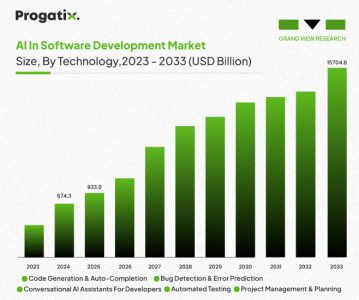
AI tools are also making it easier for people without deep coding skills to create software, bringing together technical and non-technical users. These advances are reshaping how developers build, test, and launch apps, making the whole process more accessible and straightforward.
Loveable AI is one of the prominent and leading platforms in AI-driven software development, turning natural language prompts into full-stack web apps to significantly speed up development. It serves both non-technical users and experienced developers, aiming to accelerate workflows. The platform excels in quickly creating initial app structures and user interfaces, ideal for rapid prototyping and scaffolding, with strong integrations like Supabase and GitHub.
That said, its credit-based pricing model can be a bit limiting for complex projects or if you need to make lots of changes. In April 2025, a report raised serious security concerns about the platform, especially around a phishing vulnerability called “VibeScamming.” Overall, Loveable AI offers real value for rapid prototyping, MVPs, and frontend builds, but users should carefully consider the costs and potential security risks. It’s particularly well-suited for startups, solo developers, and non-technical users working on early-stage or simpler apps.
WHAT IS LOVEABLE AI?
Platform Overview: AI-Powered App Generation
Loveable AI is more than just a development tool; it works as an “AI co-engineer” or a committed “AI software engineer” built to create complete web applications based on user descriptions. The key premise includes users articulating their application idea in plain English using text prompts. The platform’s AI engine then interprets these prompts to create the underlying code, user interface, and foundational functionality, often delivering an initial version within a minute or less. Its stated mission, echoed in the acronym LOVABLE (Letting Ordinary Visionaries Achieve Breakthroughs with Language-based Engineering), is to radically streamline and speed up the app development process.
Aiming to make software development accessible, the platform makes it available for those lacking traditional programming skills. Instantaneously, it caters to experienced developers by providing a means to bypass the often tedious setup and boilerplate coding linked with new projects, facilitating quicker prototyping and initial builds. While capable of developing complex applications, Loveable AI is usually framed as specifically potential during the early stages of a project, perfect for creating Minimum Viable Products (MVPs), functional prototypes, or the initial scaffolding upon which more complex features could be built manually.
The dual targeting reflects a strategic positioning that goes beyond traditional no-code or low-code paradigms. While embracing the accessibility goals of no-code through its natural language interface, Loveable AI heavily focuses on features normally valued by the developer community. This incorporates generating code using standard, modern frameworks, offering direct integration with GitHub for code ownership and external editing, and using strong backend solutions such as Supabase. This approach allows the platform to carve out an exclusive niche, using AI to balance the simplicity needed by non-technical users with the power and flexibility that professional developers require.
KEY TECHNOLOGY STACK
Loveable AI builds applications using a recognized stack of modern web technologies, ensuring that the generated results align with the existing development practices.
-
Frontend
The platform primarily uses React, a popular JavaScript library for building user interfaces, in combination with Vite, a rapid build tool and development server. There are also mentions suggesting potential capability or generation related to other frameworks such as Vue and Angular. For styling, it employs Tailwind CSS, allowing rapid UI development and instant previews of style changes within the platform.
-
Backend
Supabase functions as the cornerstone of Loveable AI’s backend capabilities. Described as an open-source alternative to traditional backend solutions, Supabase offers a collection of key services, including a PostgreSQL database for data storage, user authentication mechanisms, file storage solutions, and space for serverless functions through Supabase Edge Functions. This integration enables users to build applications with persistent data and user management features directly using prompts.
-
Architecture
Although the exact internal processes are proprietary, it’s clear that advanced techniques are at work behind the scenes. These might involve converting code into an Abstract Syntax Tree (AST) for precise, targeted updates rather than regenerating whole files, and mapping visual UI elements directly to their corresponding JSX source code, facilitating a smoother development experience.
SIGNIFICANT FEATURES AND FUNCTIONALITY
Loveable AI offers a wide range of features built to simplify the journey from idea to deployed application, centered on its major and key integrations.
-
AI-Driven Development Workflow:
- Prompt-Based Generation: Users deliver natural language descriptions, and AI generates code, structure, and UI.
- Iterative Refinement: Users can transform features, UI, or request fixes via conversational prompts.
- AI Assistance: Automated error detection and documentation generation.
-
Full-Stack Capabilities:
- Frontend: AI generates user interfaces, layouts, and customizations (images, fonts).
- Backend & Database: Integration with Supabase for PostgreSQL, authentication, file storage, and server-side logic.
- Complex Logic: Manages CRUD operations, data relationships, and role-based access control.
- Website Building: Could create static sites, landing pages, and personal portfolios.
-
Essential Integrations:
- GitHub: Connects projects for version control, collaboration, and manual code editing.
- Supabase: Offers backend infrastructure (database, auth, storage).
- Monetization (Stripe): Easily set up payment processing and subscriptions.
- Other APIs & Packages: Supports external APIs (e.g., OpenAI, Airtable) and npm packages for extended functionality.
-
Deployment, Hosting, and Customization:
- One-Click Deployment: Streamlined publishing process with instant live deployment.
- Hosting Options: Host on Lovable’s subdomain or external platforms such as Netlify and Vercel.
- Custom Domains: Available on paid plans.
- Progressive Web Apps (PWA): Supports offline functionality and app-like experiences.
- Embeddable Widgets: Create components like contact forms for external websites.
-
User Interface and Development Experience:
- Interface Design: Minimalist design with prompt-based interaction and some UI customization tools.
- Ease of Use: Intuitive, accessible for beginners.
- Learning Resources: Incorporates tutorials, templates, and community examples.
- Collaboration: Available in higher-tier plans with real-time collaboration.
-
Integration Ecosystem:
- Profound integrations with Supabase, GitHub, and Stripe offer full-stack capabilities for building, managing, and monetizing complete applications. This ecosystem supports the development of sophisticated applications beyond simple front-end solutions.
PRICING AND PLANS
Loveable AI uses a credit-based pricing structure where users get a set number of credits every month, which are spent during interactions with the AI engine (e.g., generating code, making edits, or requesting revisions).
-
Credit-Based Model Overview
Users are assigned a specific number of credits every month, and every significant interaction requires credits. More complex requests usually use more credits. The model aims to balance simplicity with usage tracking compared to previous message-based or token-based systems.
- Free Plan: Capabilities and Constraints
- Offering: Limitless public projects, GitHub sync, and one-click deployment.
- Limitations: 30 credits/month, with all projects being public, which makes it inapt for proprietary work.
- Paid Tiers: Pro, Teams, Enterprise
- Pro Plan: $25/month
- 100 credits/month
- Private projects, custom domains, no Lovable branding, three editors per project.
- Teams Plan: $30/month
- Includes Pro features + centralized billing and access management, 20 seats.
- Enterprise Plan: Custom pricing
- Personalized credit limits, custom integrations, committed support, and account management.
-
Loveable AI Pricing Tiers
Feature/Aspect Free Pro Teams Enterprise Price (/month) $0 $25 $30 Custom Credits Included 30 100 Included (Base) Custom Private Projects No Yes Yes Yes Custom Domains No Yes Yes Yes Remove Lovable Badge No Yes Yes Yes Max Editors/Seats 1 3 20 seats Custom Centralized Billing/Access No No Yes Yes Key Features Summary Public projects, GitHub Sync, Deploy Increased credits, Private projects, Custom domains Team collaboration, Centralized management Tailored limits & support Target User Hobbyists Individuals, Small projects Collaborating Teams Large Organization -
Cost vs. Value
The credit system might restrict fast iteration, specifically for users on paid plans, as each AI interaction consumes credits. This could be a test for highly iterative development cycles or complex projects, resulting in rapid credit depletion and the requirement for costly upgrades. While the platform simplifies rapid development, the pricing structure might delay the very speed it supports. Users must manage credit usage sensibly to avoid disruptions.
VALUE PROPOSITION ASSESSMENT
Evaluating Lovable AI needs to balance its crucial benefits against noteworthy downsides and risks.
- Strengths
- Speed & Efficiency: Deliver rapid prototyping and MVP creation in minutes or hours.
- Accessibility: Allows non-coders to build functional web apps via natural language prompts.
- Developer Productivity: Automates boilerplate code, UI generation, and API integration, boosting developer efficiency.
- Integration Ecosystem: Robust support for tools like Supabase and GitHub enhances project completeness.
- Code Ownership: Full code export to GitHub ensures adaptability and long-term control.
- Weaknesses & Considerations
- Pricing Model: Credit-based plans can be limited and costly for heavy or complex use.
- Scalability Limits: Might struggle with enterprise-grade or highly complex applications.
- Debugging Needs: AI-generated code can be buggy, needing manual fixes after export.
- Customization Limits: UI-based editing is less granular than manual coding.
- Learning Curve: Complex apps need prompt engineering skills.
- Security Risk: “VibeScamming”
- Critical Flaw: Guardio Labs (April 2025) exposed the platform’s vulnerability to phishing misuse.
- Exploit Mechanism: Attackers used prompts to generate malicious login clones with data-stealing features.
- Lack of Safeguards: Lovable scored 1.8/10 on a phishing exploitability benchmark, much worse than peers.
- Implications: Serious trust and security concerns unless mitigations are established.
- Trade-offs
- Power and speed come with trade-offs: Potential security abuse, debugging challenges, and less transparency. The platform’s ease of use can be a double-edged sword.
Got ideas for a no-code or low-code platform?
Let's Connect-
Overall Assessment
-
Lovable AI is best suited for:
- Quick prototyping and MVPs
- Frontend scaffolding
- Simple apps built by non-technical users
-
Less ideal for:
- Security-critical or enterprise-scale systems
- Projects sensitive to unpredictable costs
- Teams demanding profound control and customization
For fast, accessible app development, Lovable AI is a potential tool, but it should be used with caution, mainly related to security. Due diligence on the latest defense post-VibeScamming report is crucial before implementing.
COMPETITIVE ANALYSIS
Loveable AI works in a competitive space inhabited by other AI-driven development tools, traditional no-code/low-code platforms, and open-source alternatives.
-
Key Competitors: Bolt & Cursor
- Bolt is Lovable AI’s closest rival as both offer AI-generated full-stack apps from prompts. Bolt leans more developer-driven, possibly providing better debugging tools.
- Cursor is less about app generation and more about improving coding within an IDE.
- Pricing: Lovable uses a credit-based model; Bolt uses tokens based on code size. Both start somewhere around $20–25/month. Lovable’s model might be simpler for some, but costs can add up wildly in both.
- User Experience: Lovable stands out for its intuitive UI and Supabase integration.
- Security: Lovable has a recognized vulnerability (VibeScamming). No similar concerns are documented for Bolt or Cursor; this could influence trust.
-
Feature Comparison Snapshot
Feature Lovable AI Bolt Cursor Feature Lovable AI Bolt Cursor gpt-engineer (Open Source) App Gen Style Prompt-based full-stack Prompt-based full-stack In-IDE code assistant Core AI code gen engine Best For Non-devs & prototyping Developers & debugging Developers in IDEs DIY developers Pricing Credit-based ($25/mo) Token-based (~$20/mo) Varies Free (self-hosted) Free Tier Very limited Limited tokens Limited usage Full access, DIY Code Ownership Yes (via GitHub) Yes (likely GitHub) Edits existing code only Yes Security Concerns Yes (VibeScamming) Not reported Not reported Depends on setup Standouts UX, Supabase integration Dev tools, debugging IDE augmentation Free, flexible, hands-on - Unlike drag-and-drop builders (e.g., Webflow), Lovable outputs real code (React, Vite), giving more adaptability.
- Appeals to both devs and non-devs, with GitHub integration and full code export.
- Works using natural language prompts, not visual UIs, more flexible but less tangible.
-
vs. Open Source (gpt-engineer)
- Lovable is the commercial version of GPT-Engineer, designed by the same team.
- While GPT-Engineer is free and open-source, Lovable incorporates:
- A clean UI
- Built-in integrations (Supabase, hosting)
- Team collaboration
- Support and managed workflows
- Perfect for users who want ease over DIY.
-
The Role of Prompt Engineering
- While Lovable is easy to begin with, getting optimal outcomes, specifically for complex apps, needs skill.
- Advanced users guide the AI using structured prompts, role-based framing (e.g., “act as a UX designer”), and iterative workflows.
- It’s not just “type and build,” you’re working with the AI, and success relies on how well you lead it.
INDUSTRY APPLICATIONS & USE CASES
-
MVPs & Prototypes
Lovable AI thrives at rapidly building minimum viable products, but it helps startups and product teams change ideas into functional prototypes in hours rather than weeks, perfect for early user testing and stakeholder demos. One user even created 30 different apps in 30 days, stressing its speed for iteration.
-
In-house Tools & Dashboards
Perfect for building simple business tools such as CRMs, dashboards, inventory trackers, or workflow apps, specifically when time-to-launch matters more than detailed customization.
-
Frontend Development Acceleration
Developers can generate UI components, pages, and layouts from prompts or designs, decreasing time spent on boilerplate or repetitive front-end work.
-
Scaffolding Complex Apps
Lovable can kickstart complex apps by setting up the project structure, integrating services (e.g., Supabase), and creating a functional base. Developers can then transfer the code to GitHub and prolong it manually.
-
Marketing Websites & Landing Pages
Simple personal sites, portfolios, or business landing pages can be created rapidly and effortlessly with Lovable’s natural-language-driven interface.
-
Non-Technical Team Enablement
Designers, PMs, and non-coders can directly create and test functional apps without waiting on developers, offering space for more collaborative, iterative product development.
-
Sample Applications Created
Use cases in the real world fall into the following categories.
- Clones: e.g., YouTube replica
- Content Tools: Blogs and publishing platforms
- Productivity: To-do lists, note apps, Kanban boards
- Data Tools: Finance trackers, CRMs, visual dashboards
- E-commerce: Online stores and shopping carts
- AI Apps: e.g., AI-powered image generators
- Utilities: Recipe apps, event planners
- Websites: Personal or business landing pages
Users also benefit from the evolving library of community-made templates and projects to build upon.
-
Evaluations Based on Business Size
-
Startups & Entrepreneurs
Lovable is highly striking for fast-moving startups that require to validate ideas promptly with restricted resources. It lessens the cost and time of building MVPs, though the credit-based pricing model could be an issue for very lean teams.
-
Small to Medium Businesses (SMBs)
SMBs can use Lovable for building internal apps or customer-facing tools effectively. The platform’s Teams plan allows collaboration, making it a practical option for small development squadrons or product teams.
-
Large Enterprises
Potentially beneficial for internal department tools, innovation teams, or prototyping workflows. However, the VibeScamming security vulnerability flagged in April 2025 raises serious issues for enterprise IT and security teams. Unless Lovable addresses these risks efficiently, implementation in high-security settings could be restricted.
Strategic Implementation Tips for Lovable AI Users
Based on the analysis of Lovable AI done in this blog post, here are the recommendations:
- Entrepreneurs & Startups: Perfect for rapid MVPs and idea validation. Assess Free/Pro plan limits ($0/$25) vs. usage. Avoid managing sensitive data unless security mitigations are verified.
- Developers & Tech Teams: Beneficial for generating scaffolding, UIs, and integrations. Leverage GitHub integration for control. Compare cost-effectiveness and safety with tools such as Bolt, Cursor, or AI coding assistants.
- Non-Technical Users: Great for building simple apps without code. Start small, anticipate a learning curve, and seek assistance for complex tasks.
- Security Warning: Investigate the unresolved VibeScamming vulnerability before using Lovable AI for sensitive or critical applications. Confirm official security updates post-April 2025.
- Compare Alternatives: Assess Lovable AI against competitors (e.g., Bolt, Cursor) on features, cost, usability, and security. Traditional no-code/low-code or IDE-based AI tools could be better fits in some cases.
- Start Small: Start with a non-critical pilot project on a Free/Pro plan to evaluate credit usage, usability, output quality, and debugging before scaling up.
Bottom Line
Lovable AI is an impressive tool designed to offer speed, simplicity, and functionality in the fast-growing category of AI-driven development platforms. From first-time creators to seasoned developers, everyone can benefit from its benefits for building web applications. Its capability to change plain language into working apps in minutes is sincerely remarkable, specifically for prototyping, MVPs, and early-stage ideas. Though users should be aware of its restrictions, mainly surrounding pricing, scalability, and the unresolved VibeScamming security issues. Eventually, Lovable AI is best addressed as a productivity accelerator, not a complete replacement for traditional development, making it a valuable tool when used considerately and with clear potential.
How Progatix Can Help?
While Lovable AI offers a notable hike in AI-driven app generation, platforms like it often elevate restrictions in scalability, customization, and security, particularly for mission-critical or enterprise-grade projects. This is where Progatix steps in. With extensive experience, Progatix strengthens businesses to go beyond quick prototyping by delivering safe, scalable, and custom-made software solutions. From custom SaaS platforms and ERP systems to mobile apps and enterprise IT services, Progatix helps businesses change early-stage ideas, whether AI-generated or manually conceptualized, into strong, production-equipped software with complete ownership, long-term support, and enterprise-grade architecture.
Hire an AI Developer to Build a Solution Like Lovable AI
Let's Connect




 Let's Discuss Your Tech Solutions